

Predictive Maintenance · MANUFACTURING
Robotic arms that signal degradation before they stop the line.
Robotic arms in automotive assembly run continuous, high-precision duty cycles where a single mechanical or electrical fault stops the line. The XMPro AO Platform fuses current draw, voltage, vibration, temperature, acoustic and network telemetry into per-arm condition predictions — flagging both mechanical wear and electrical faults with confidence-scored remaining useful life.
What's getting in the way today.
Robotic arm reliability sits between precision, cycle time and line economics. Three pressures compound:
Continuous wear, dual failure modes
Mechanical bearings, gears and joints wear alongside electrical components — predictive coverage needs to span both domains, not just one.
Complex failure interactions
Multiple moving parts, control systems and embedded electronics produce failure modes that fixed-interval schedules rarely catch in time.
Line-stop economics
A single robotic arm malfunction halts the assembly line — every minute of downtime carries cascading throughput and quality impact.
Robotic Arm Predictive Maintenance — how it works.
Per-arm condition prediction across both mechanical and electrical domains — fed by the sensors already on the asset, with rule logic and ML models targeting the specific failure modes that take the line down.
The platform integrates current draw, voltage, temperature, vibration, acoustic and network-integrity telemetry continuously across every robotic arm. ML models cover both domains: anomaly detection for unusual temperature increases, regression for mechanical remaining useful life on bearings and gears, classification for electrical fault patterns. Threshold breaches on current draw create work requests for electrical faults; combined mechanical and electrical predictions generate ranked maintenance recommendations with parts list and crew assignment. Per-arm Overall Equipment Effectiveness is calculated continuously, and a digital twin lets engineers simulate operating scenarios and tune intervention timing. Operators see line-level health, per-arm drill-down and 2D/3D component models that highlight wear-prone areas.
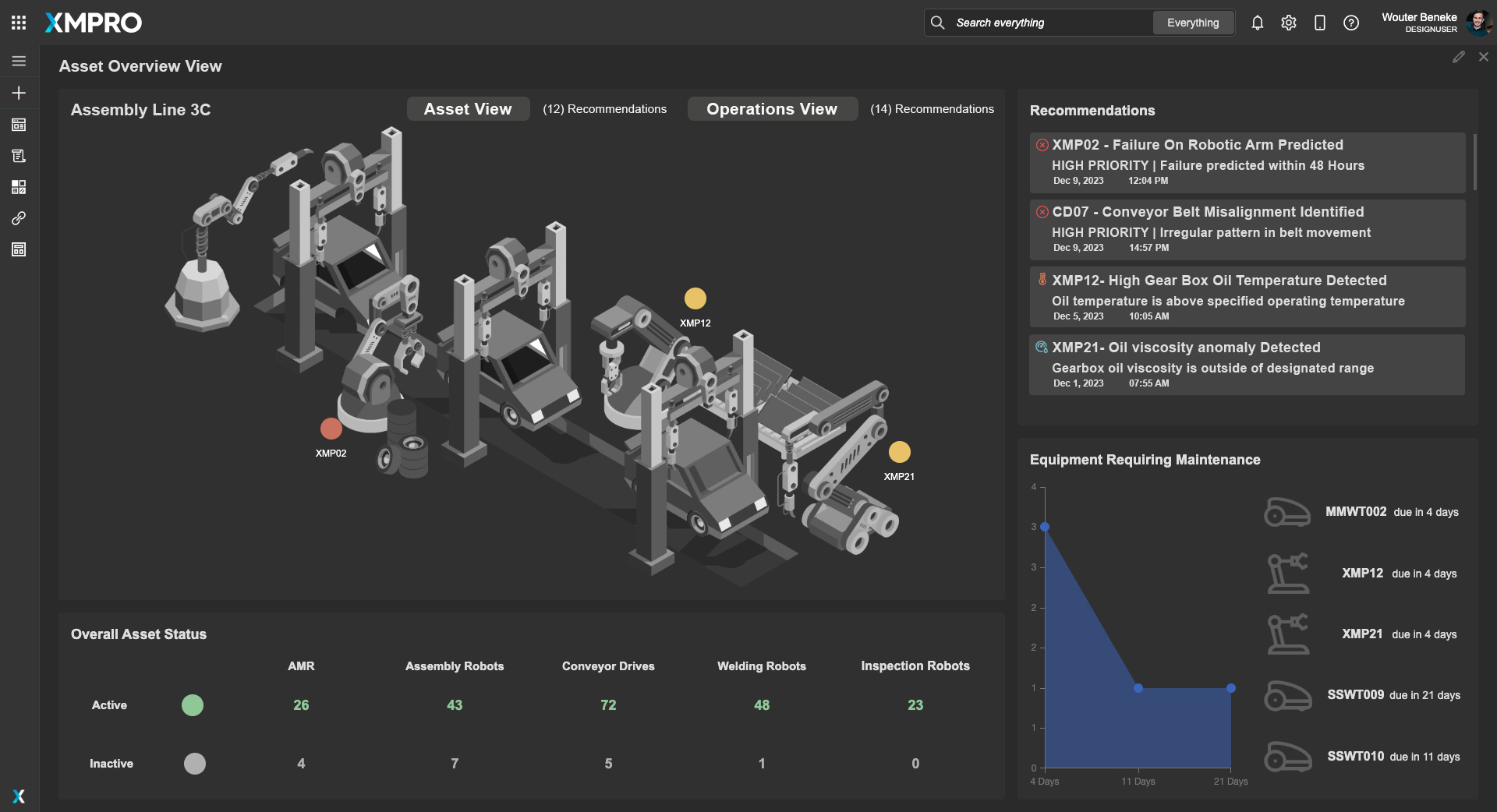
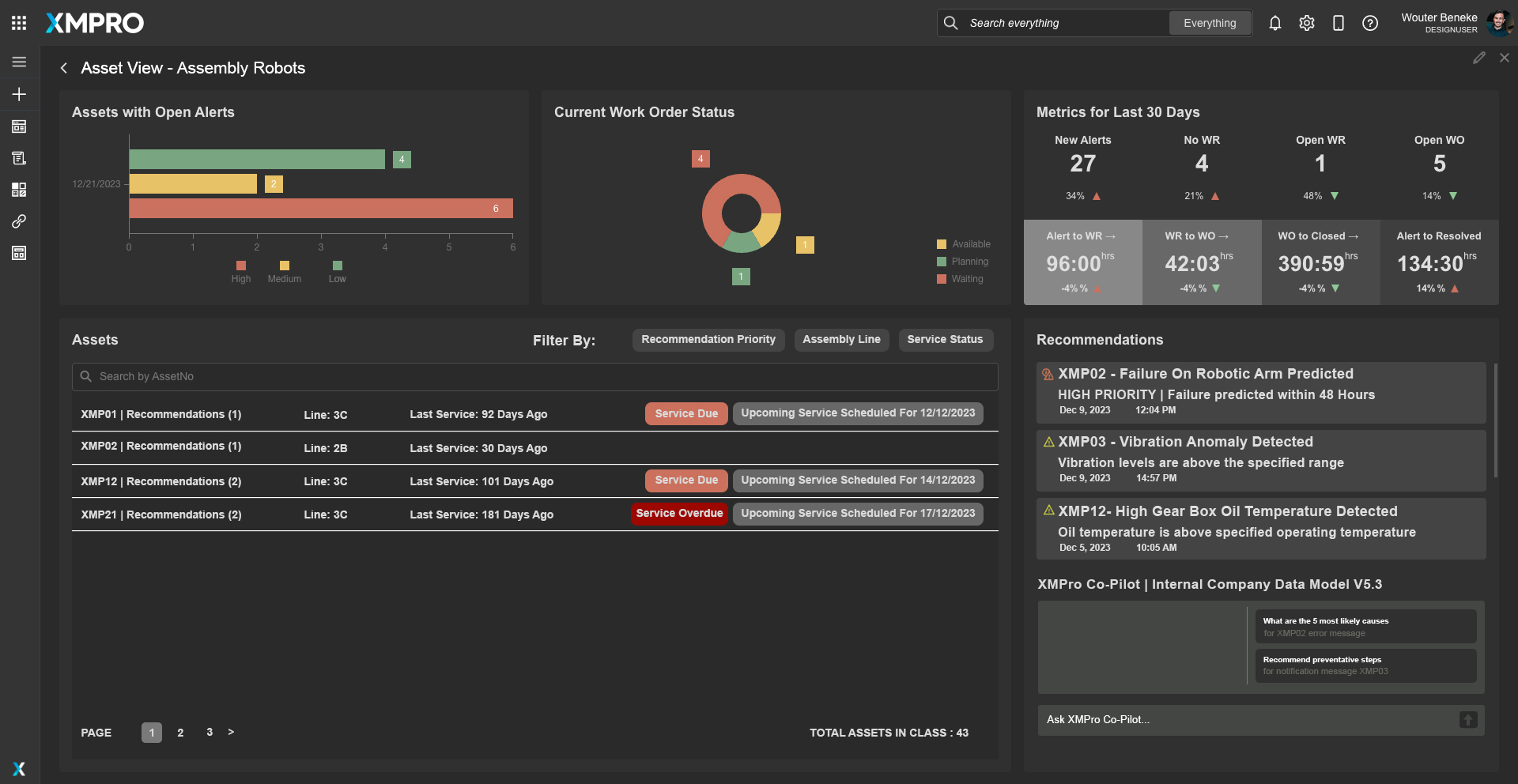
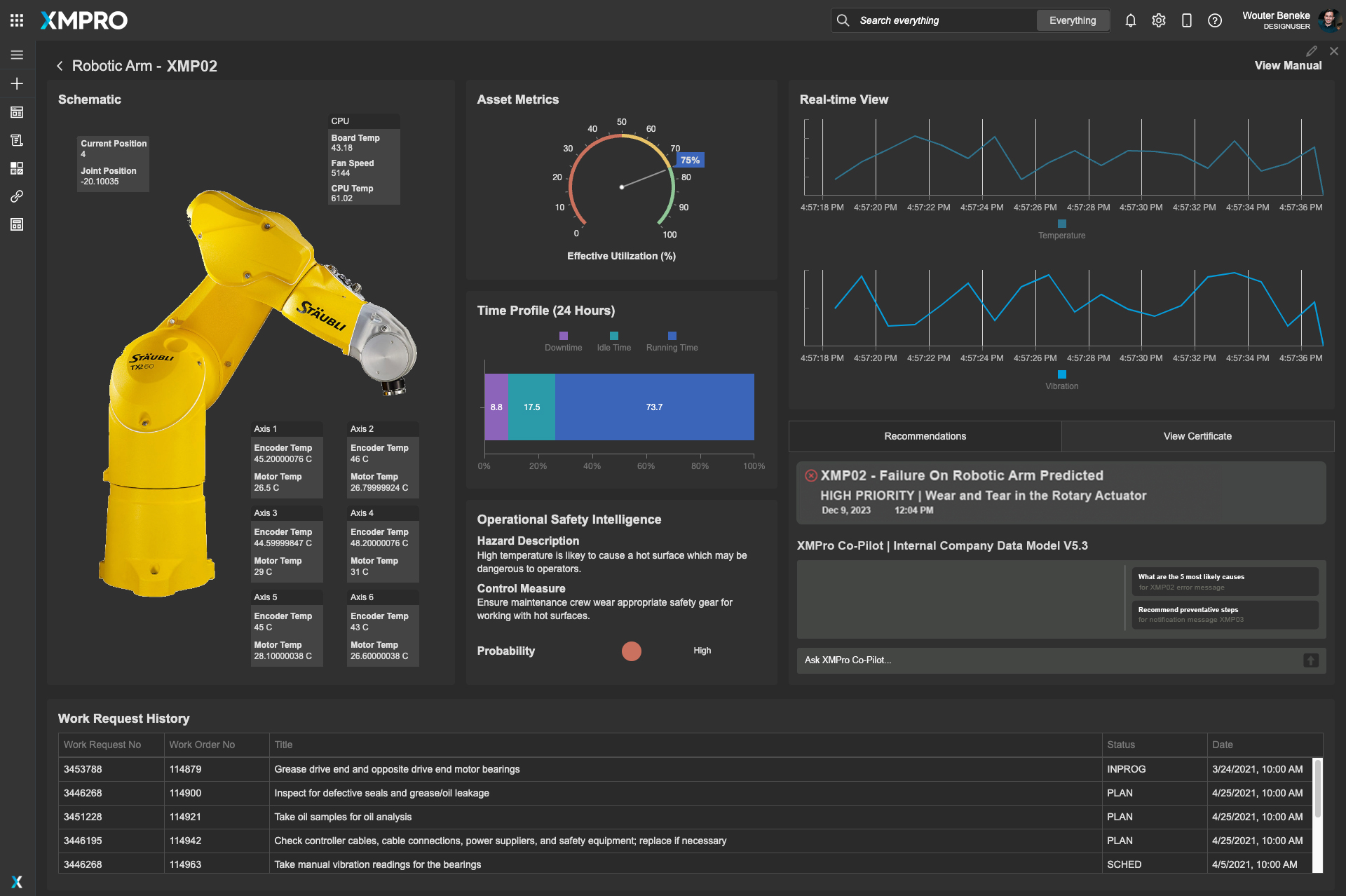
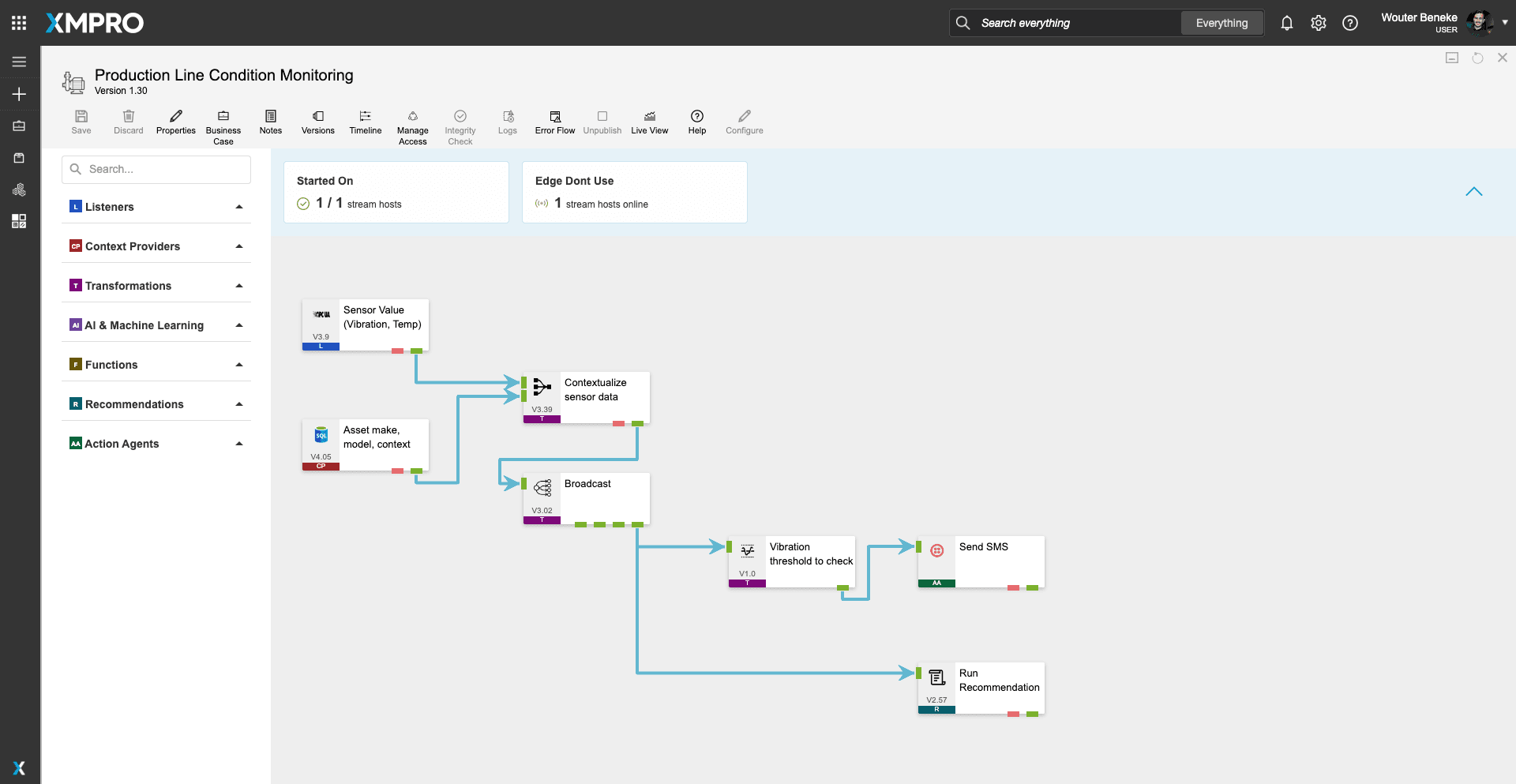
*Illustrative dashboards from the platform. Layout, signals and decision points are scoped per site.
Scope this for your operation.
Tell us about your fleet, your control maturity and the lever that matters most. We’ll map this use case to your starting point.
What this looks like in operation.
Both failure domains covered
Mechanical wear and electrical faults are predicted in the same pipeline — neither domain hides because the other carries the monitoring.
Line uptime protected
Predicted failures move maintenance into planned windows, so the assembly line stops on plan, not on surprise.
Right-sized maintenance
Maintenance shifts from fixed-interval inspections to condition-based intervention, freeing crew time and extending component life.
Built for these industries.
Other solutions you might explore.
Not a concept. In production.
XMPro is deployed at Tier 1 global operators across asset-intensive and mission-critical industries — delivering measurable results across predictive maintenance, process optimisation and operational intelligence.
Now pushing the frontier.
MAGS agents are achieving what no other industrial platform has demonstrated — sustained autonomous operations at enterprise scale.