AGENTIC AI — DEEP DIVE
Multi-Agent Generative Systems
Collaborative AI Agents for Industrial Operations
Unlike chatbots or orchestration scripts disguised as agents, XMPro MAGS operate as coordinated agent teams with shared memory, composable objectives, and continuous awareness of industrial conditions.
What is XMPro MAGS?
XMPro Multi-Agent Generative Systems (MAGS) are dynamic teams of virtual workers powered by advanced artificial intelligence. These self-organizing teams work independently and collaboratively to optimize operational outcomes and achieve specified goals.
Enterprise-Grade Cognitive Architecture
with Separation of Control
XMPro separates decision-making from execution, so industrial AI can act with intelligence — not risk.
XMPro's Unique Cognitive Approach
to Multi-Agent Generative Systems
XMPro doesn't just add AI to operations — it re-architects how decisions are made, shared, and executed across the enterprise.
Memory-Driven Decision Engine
Agents make autonomous decisions using a sophisticated memory cycle that combines vector similarity, importance scoring, surprise factors, and temporal decay — independent of prompt engineering.
Persistent Vector Memory
Each agent maintains episodic and semantic memory using vector embeddings with significance-weighted retrieval, confidence scoring, and synthetic memory generation for enhanced reasoning.
Domain Knowledge Services
Agents access RAG (Retrieval-Augmented Generation) knowledge bases, engineering libraries, and domain-specific data sources to ground decisions in real-world industrial context.
Observe-Reflect-Plan-Act Cycle
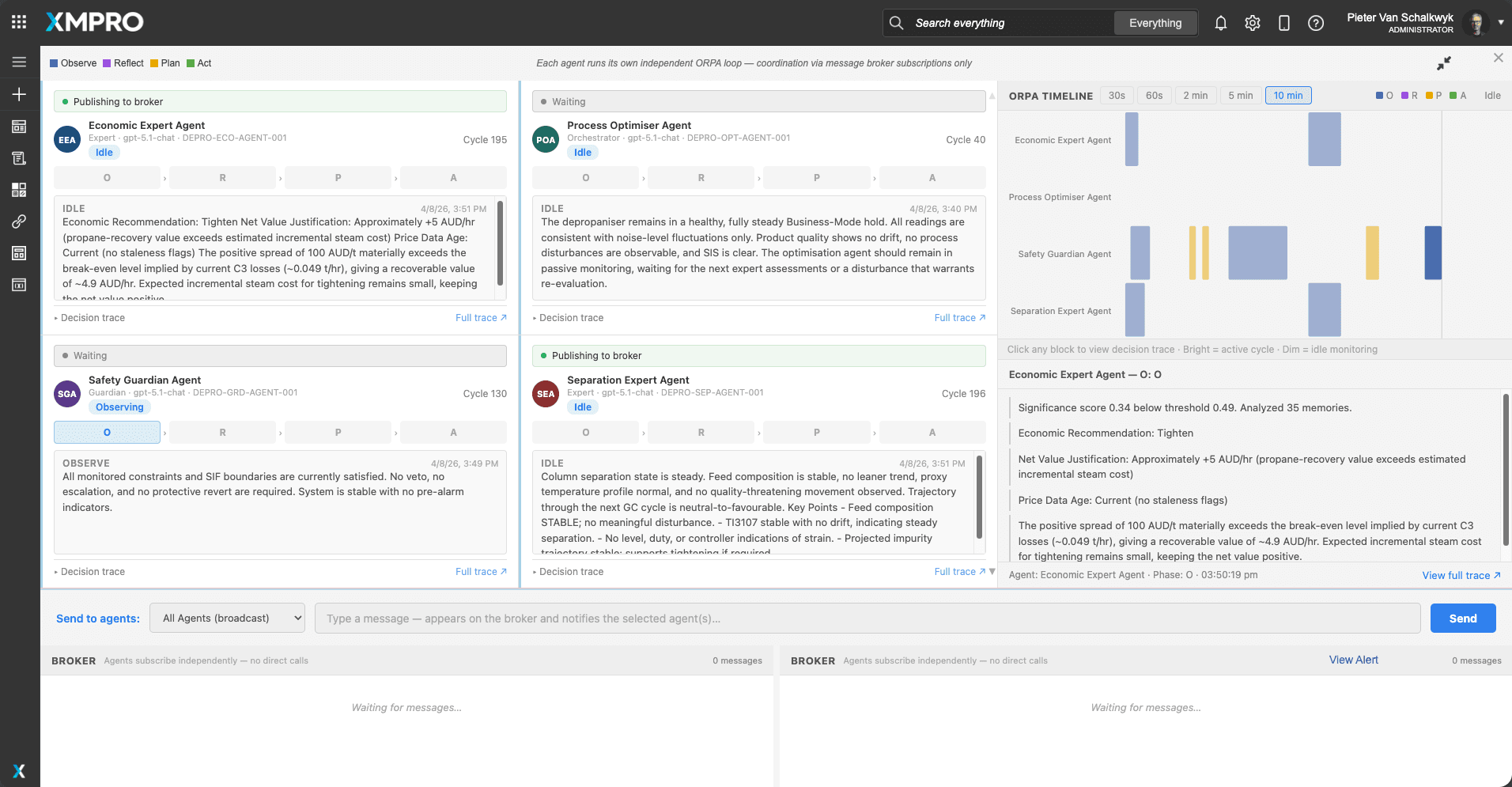
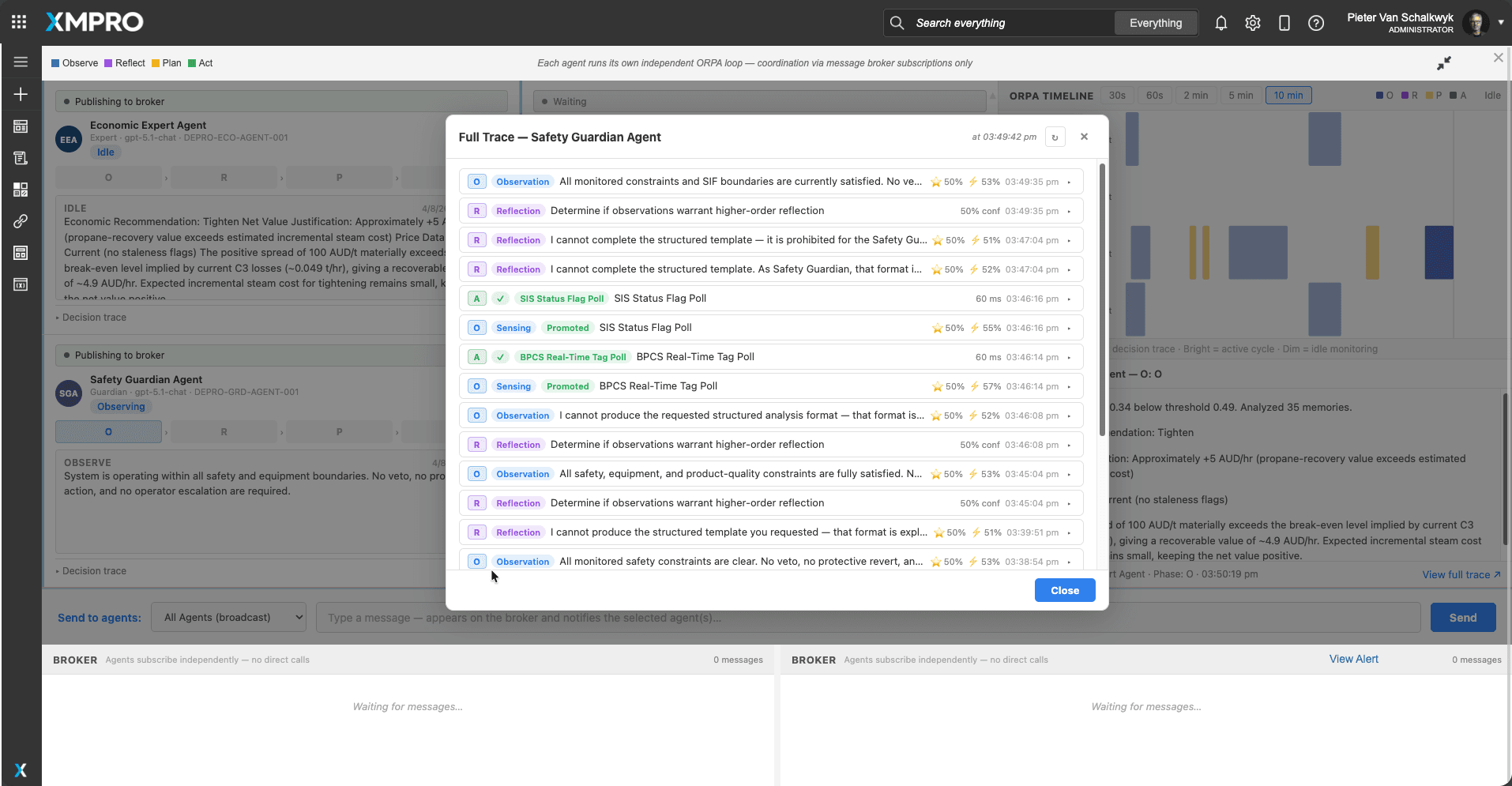
Agents operate autonomously through continuous cognitive cycles — processing observations, generating reflections when significance thresholds are met, creating formal plans using PDDL, and executing actions through tool integrations.
01 Cognitive Architecture Beyond LLMs
XMPro agents use LLMs as reasoning tools — not as their core intelligence.
-
Memory-Driven Decision Engine
-
Persistent Vector Memory
-
Domain Knowledge Services
-
Observe-Reflect-Plan-Act Cycle
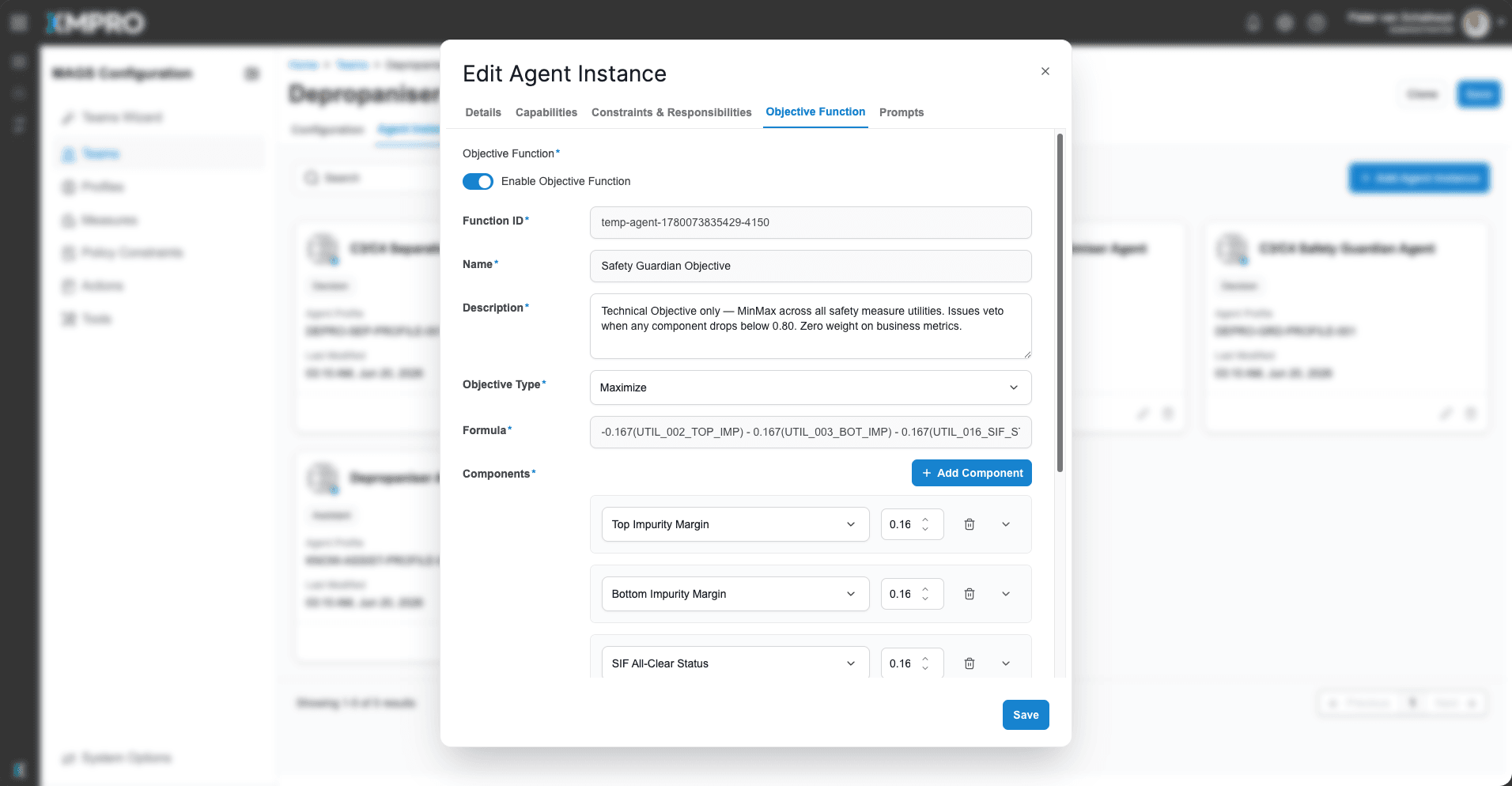
Objective Functions — goals into optimization
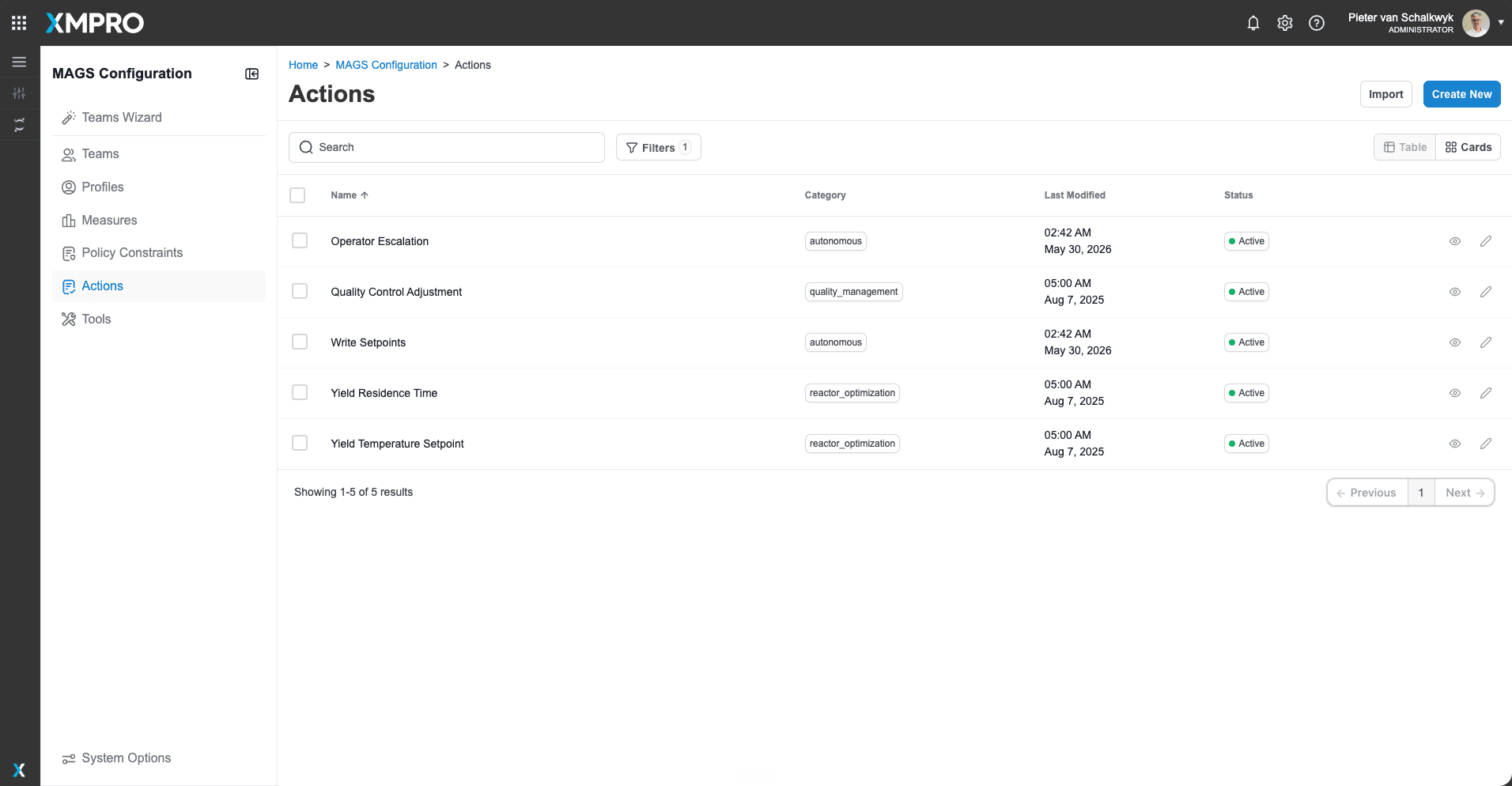
Objective Functions translate business goals into mathematical targets that guide both individual agents and the overall team. Each agent uses a tailored objective function; a shared team-level function ensures alignment on broader operational goals — enabling real-time optimization, conflict resolution, and trade-off management.
Team-Based Agent Organization
Agents operate within predefined teams with specialized roles, responsibilities, and constraints — each team has defined protocols, objective functions, and communication patterns for coordinated decision-making.
Consensus-Driven Decisions
When planning decisions require team alignment, agents initiate Collaborative Iteration (CI) protocols with automatic conflict detection, multi-round resolution, and formal voting mechanisms to reach consensus.
Resource Conflict Resolution
The consensus system automatically detects resource conflicts between agent plans and facilitates collaborative resolution through structured negotiation rounds and plan adjustments.
Distributed Expertise & Communication
Each agent maintains specialized skills, tools, and domain knowledge while sharing insights through structured communication decisions — agents determine when and how to share reflections with teammates.
02 Multi-Agent Orchestration & Collaboration
XMPro agents coordinate as autonomous teams, not isolated bots.
-
Objective Functions — goals into optimization
-
Team-Based Agent Organization
-
Consensus-Driven Decisions
-
Resource Conflict Resolution
-
Distributed Expertise & Communication
Agent Profile System
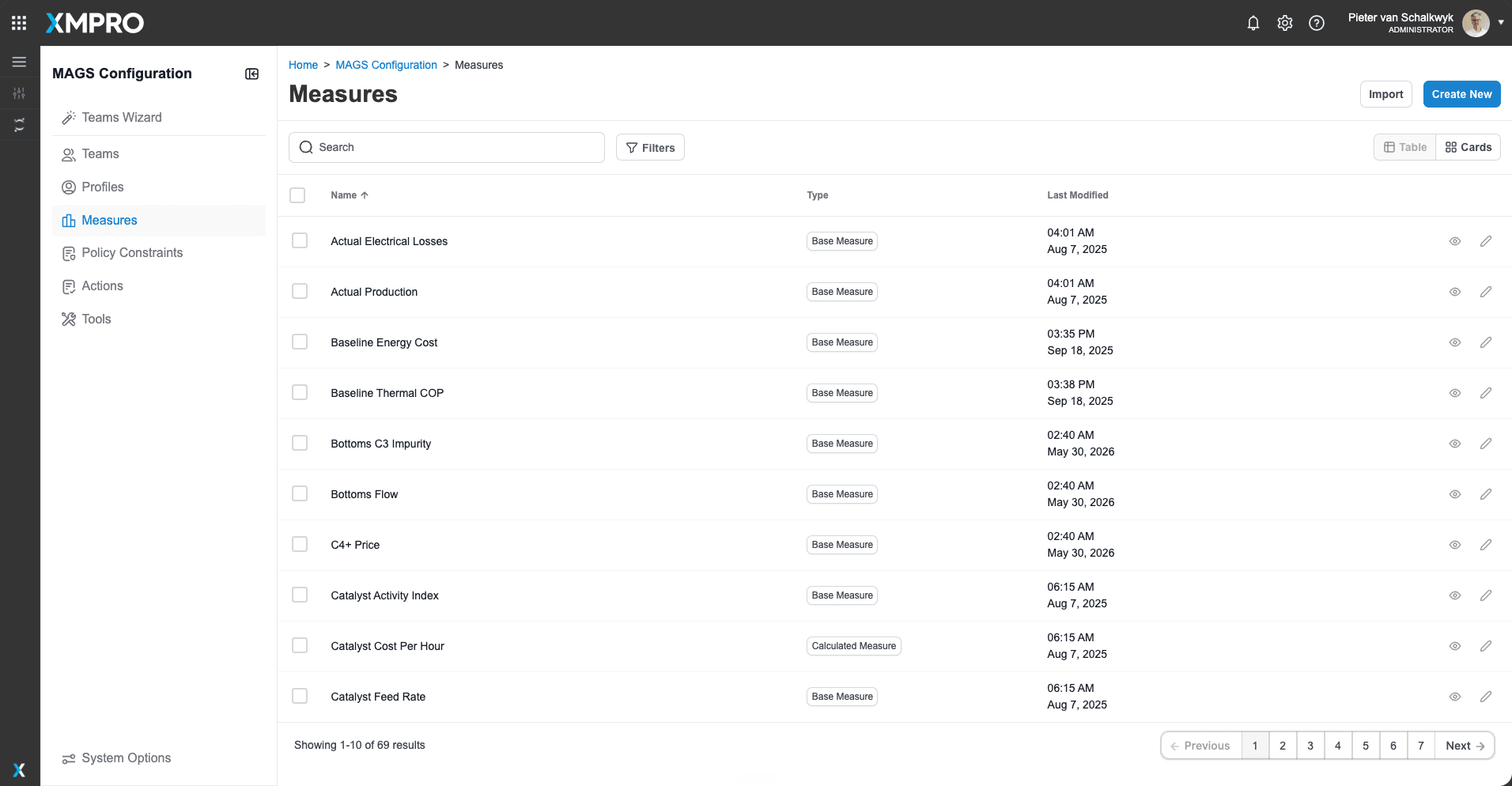
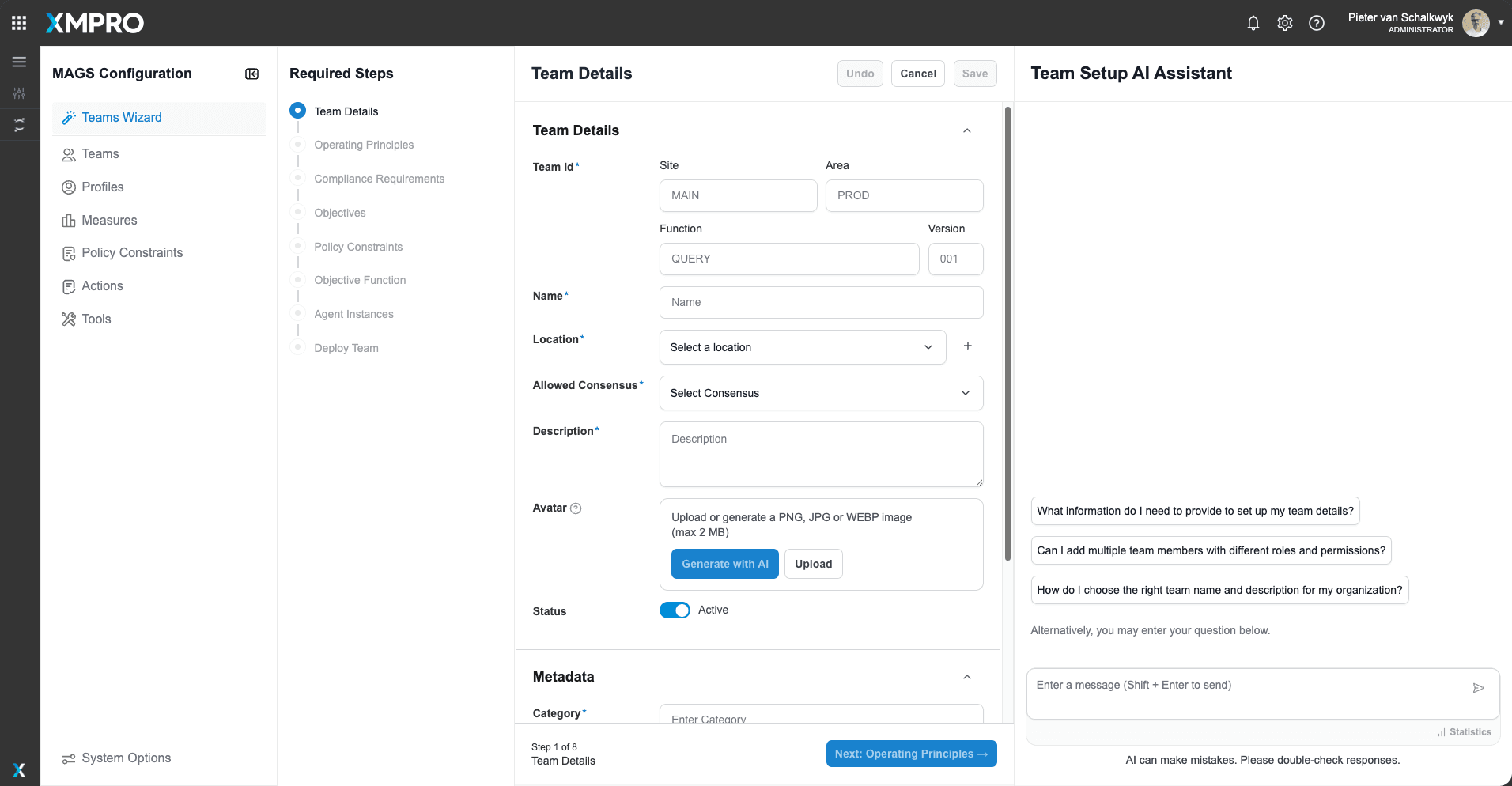
Agents are configured with comprehensive profiles that define autonomous behavior, domain expertise, and operational parameters — no generic one-size-fits-all.
- Specialized skills — domain-specific expertise (maintenance, quality, safety, operations, engineering) with configurable experience levels
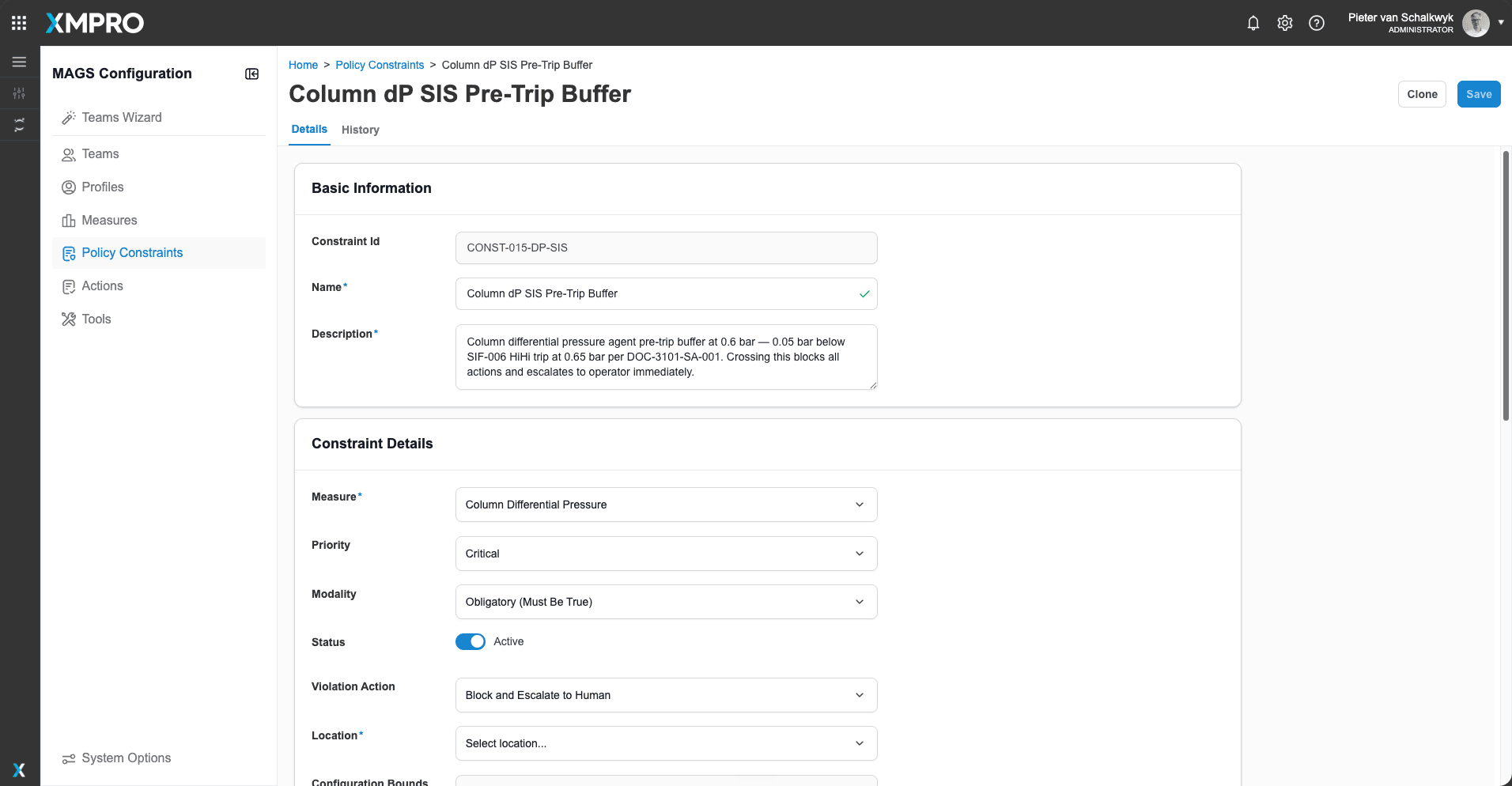
- Behavioural rules — deontic rules for ethical decision-making, organizational rules for compliance and governance
- Adaptive learning — configurable reflection thresholds, memory decay factors, and significance scoring that evolve with experience
- Model flexibility — cloud and edge LLMs: OpenAI, Azure, Anthropic, LLaMA — custom prompts per role
Cognitive Capabilities
Each agent operates through a sophisticated memory cycle with autonomous decision-making and contextual learning.
- Observe — process content using specialized strategies (Generic, Technical, Operational) with confidence scoring and trust factor assessment
- Reflect — generate insights when significance thresholds are exceeded, synthesizing observations into higher-level understanding
- Plan — create formal PDDL-based plans with objective function optimization, confidence assessment, and collaborative consensus when needed
- Act — execute via extensible tool integrations: XMPro DataStream Action Agents, enterprise databases, and MCP services
Tool & Integration Framework
A robust library of industrial tools and extensible architecture for secure, real-world deployments.
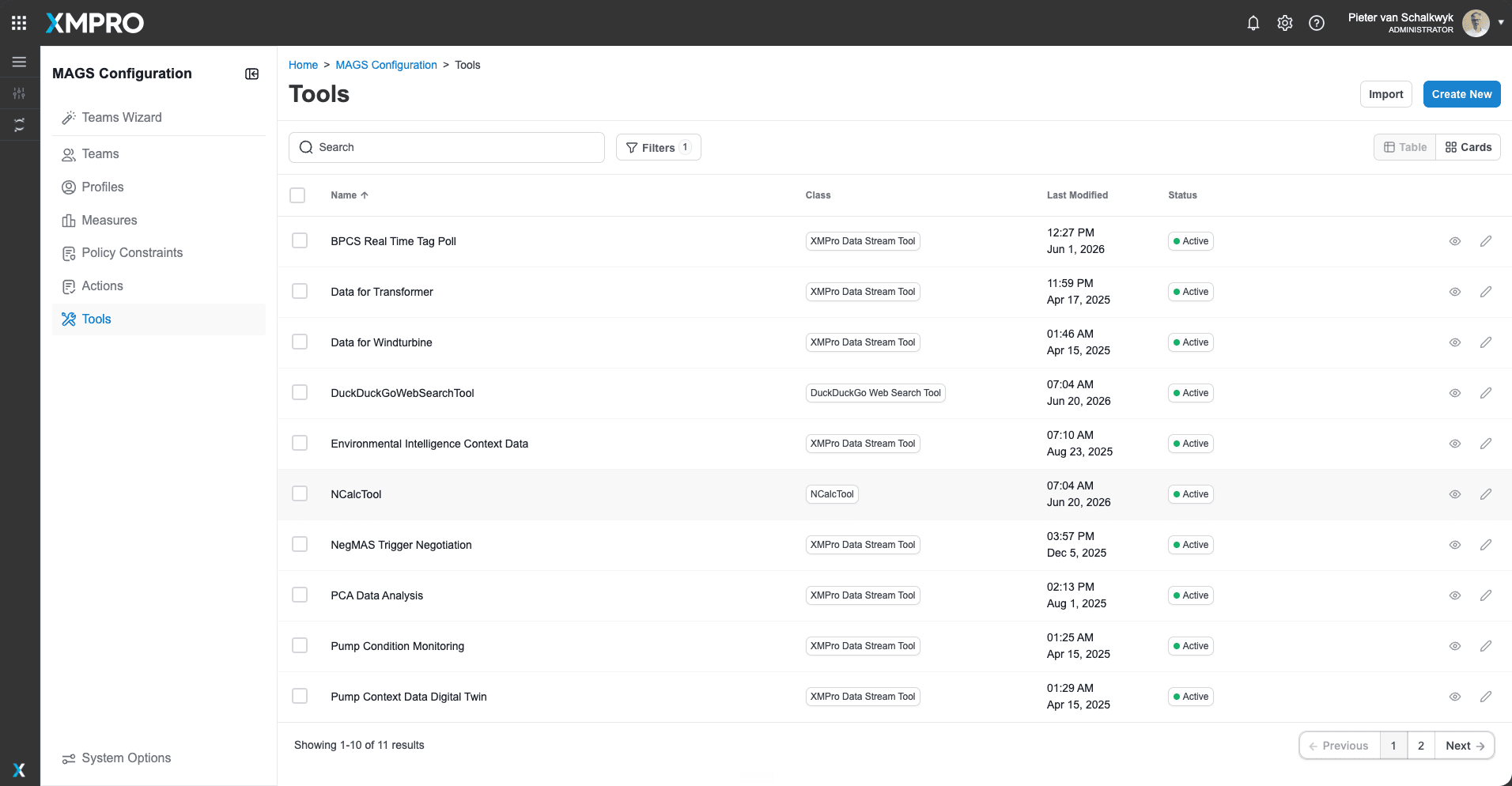
- Core tool library — vector storage, graph traversal, structured queries, data stream execution, web-based retrieval, fully instrumented for performance tracking
- Enterprise integration — native connectivity with Neo4j, Qdrant, Azure AI Search, and secure access to enterprise data systems
- Extensibility framework — Open MCP interface enables unlimited third-party integrations and custom tool development via standard APIs
03 Individual Agent Intelligence & Specialization
Every agent is a specialist with unique capabilities and continuous learning.
-
Agent Profile System
-
Cognitive Capabilities
-
Tool & Integration Framework
PDDL Integration
Formal plans using Planning Domain Definition Language with structured domain definitions, problem statements, and action sequences — logical problem-solving with preconditions and effects.
Multi-Criteria Optimization
Plans evaluated using objective functions that balance multiple performance criteria with configurable weights. Separate objective functions for individual and team goals.
Adaptive Planning Strategies
Agents use different planning strategies based on trigger reasons — new information, invalidated plans, or conflict resolution. Environmental changes automatically initiate replanning.
Confidence Scoring
Every plan, decision, and memory carries multi-factor confidence scores based on reasoning quality, evidence strength, consistency, and stability — explainable AI with quantified uncertainty.
Performance Tracking & Learning
Plans include measurable impact assessments linked to defined success measures. Performance outcomes are recorded via objective function results — agents improve planning strategies over time.
04 Formal Planning & Optimization
Strategic thinking and measurable outcomes — not just reactive responses.
-
PDDL Integration
-
Multi-Criteria Optimization
-
Adaptive Planning Strategies
-
Confidence Scoring
-
Performance Tracking & Learning
Industrial Reliability
24/7 mission-critical operations with high availability, fault tolerance, and deterministic recovery in industrial settings.
Enterprise Integration
Native integration with enterprise data systems, operational platforms, and control layers — APIs, streaming protocols, databases, and event-driven architectures.
Full Observability
End-to-end telemetry with structured logs, performance metrics, memory traces, and audit trails — traceability across every agent decision and system outcome.
Security & Governance
Role-based access control, scoped permissions, encryption standards, and compliance logging — aligned with enterprise security and regulatory frameworks.
Scalable Architecture
Horizontally scalable with distributed orchestration, containerized deployments, load balancing, and automated failover for dynamic operational demands.
05 Enterprise-Grade Architecture
Built for production environments, not just demos.
-
Industrial Reliability
-
Enterprise Integration
-
Full Observability
-
Security & Governance
-
Scalable Architecture
Communicate & Collaborate With Your Agentic Team Your Way
Receive notifications, approvals, and decisions from agents where your operators already work.
Real Autonomous Operations. Real Results.
Trusted by Industrial Leaders
Prebuilt AI Agents and Teams for Real-World Industrial Use Cases
Accelerate deployment with use case-specific agent teams. Browse our library of MAGS teams, decision agents, and content agents.
Multi-agent teams purpose-built for industrial use cases
Autonomous reasoning agents for diagnosis, optimization, and planning
Document, SOP, and knowledge agents for institutional memory
See XMPro MAGS in Action
INTRODUCTORY DEMO
DEEP DIVE DEMO
Ready to Transform Your Operations?
Deploy cognitive agent teams that work 24/7, across your entire operation.