
See It Work
See It Work

Your procedures.
Ready for your agents.

Machine-readable. Source-linked. Human-reviewed. Signed and versioned.

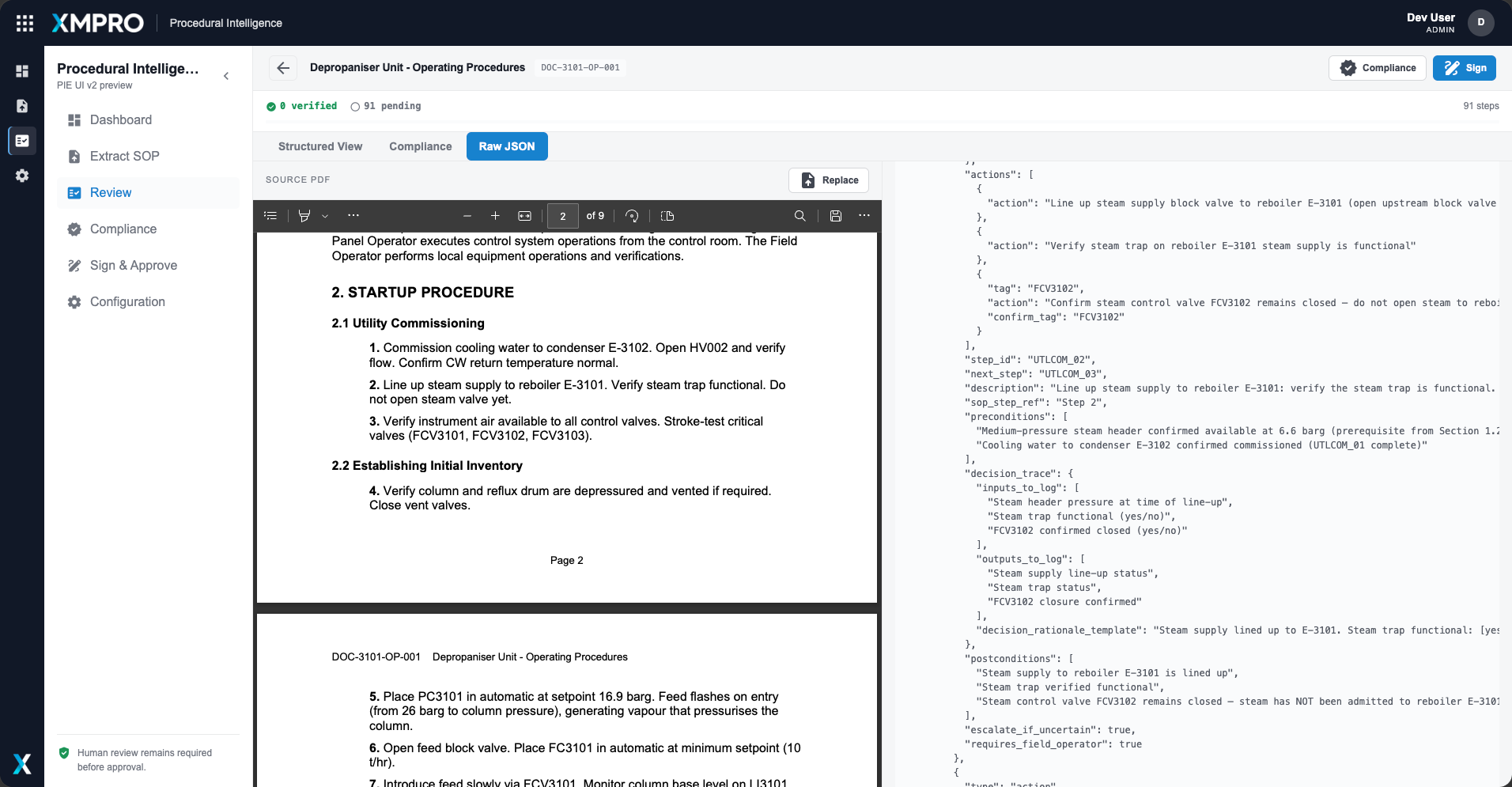
XMPro PIE source procedure beside an expanded instruction with entry conditions, preconditions, actions and postconditions. Review shows 0 verified and 91 pending steps.
Procedural IntelligenceXMPro PIE
DOC-3101-OP-001 · Depropaniser Unit

Extract SOP

PDFDepropaniser Unit

Operating Procedures

Source selected
SOP TYPE
Auto-classify from the document
✓Semantic cross-validation
Extract SOP
CONTROLLED OPERATING PROCEDURE
Depropaniser Unit

DOC-3101-OP-001

What the procedure contains
  • Operating modes and prerequisites
  • Safety limits and constraints
  • Step-by-step actions
  • Abnormal responses
Use the controlled procedure

Start with the operating procedure your team already uses. The original PDF remains available for checking the extracted result.

Check meaning across the extraction

Semantic cross-validation checks the emerging structure for consistency. It supports the review draft; it does not replace engineering verification.

01 / 07Load the procedure
Autoplay · hover to pause

Beyond document search

Don’t just find the paragraph.
Preserve how the procedure works.

An operating instruction is more than text. It connects a condition to an action, within a limit, with an exception when something goes wrong.

XMPro PIE makes those relationships explicit, so people can verify them and agents can use a defined procedural model.

Inside the product

From procedure to trusted handover.

Five moments that make the difference.

01 Load

Start with the procedure you already trust.

Choose the controlled document and its type. The source stays with you through extraction and review.
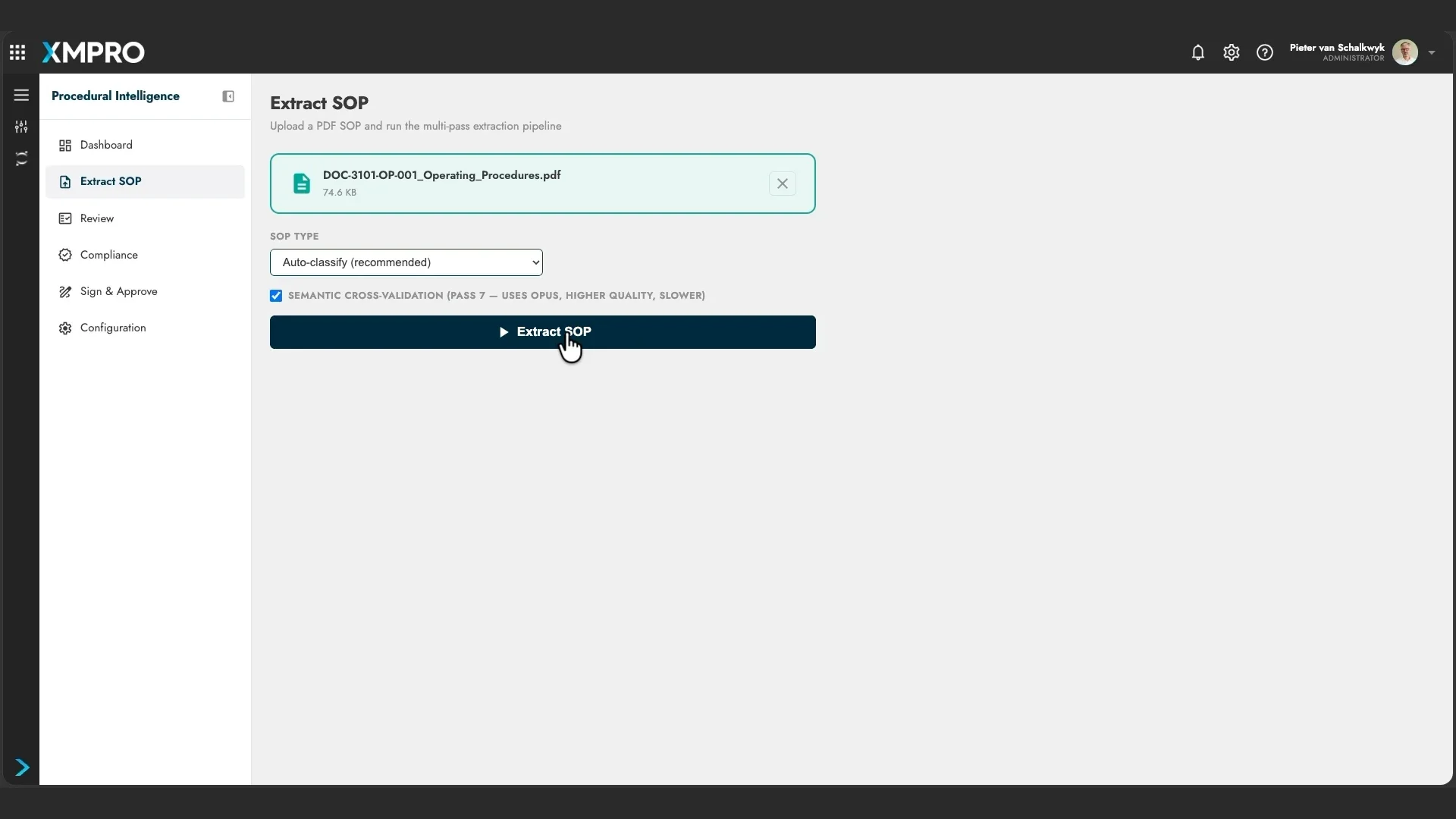
XMPro PIE Extract SOP screen with a selected operating-procedure PDF and document classification.
Controlled source · document classificationEnlarge screen

02 Extract

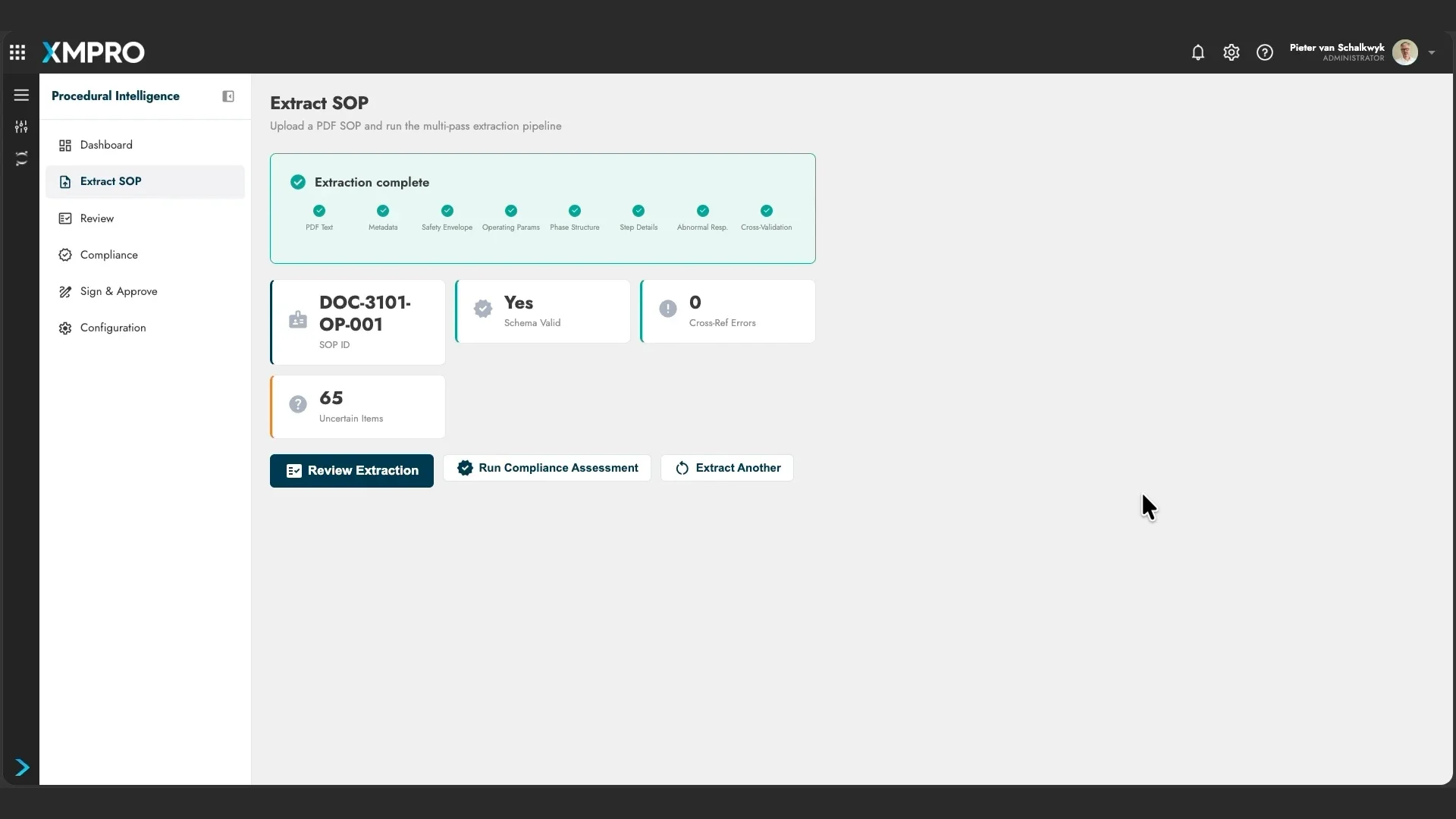
One procedure. Eight focused readings.

Each pass looks for a different kind of knowledge. Cross-check the combined draft—and surface uncertainty for review.

XMPro PIE extraction results showing completed passes, schema validation and uncertain items requiring review.
Focused passes · one reviewable draftEnlarge screen

03 Review

Your experts make the call.

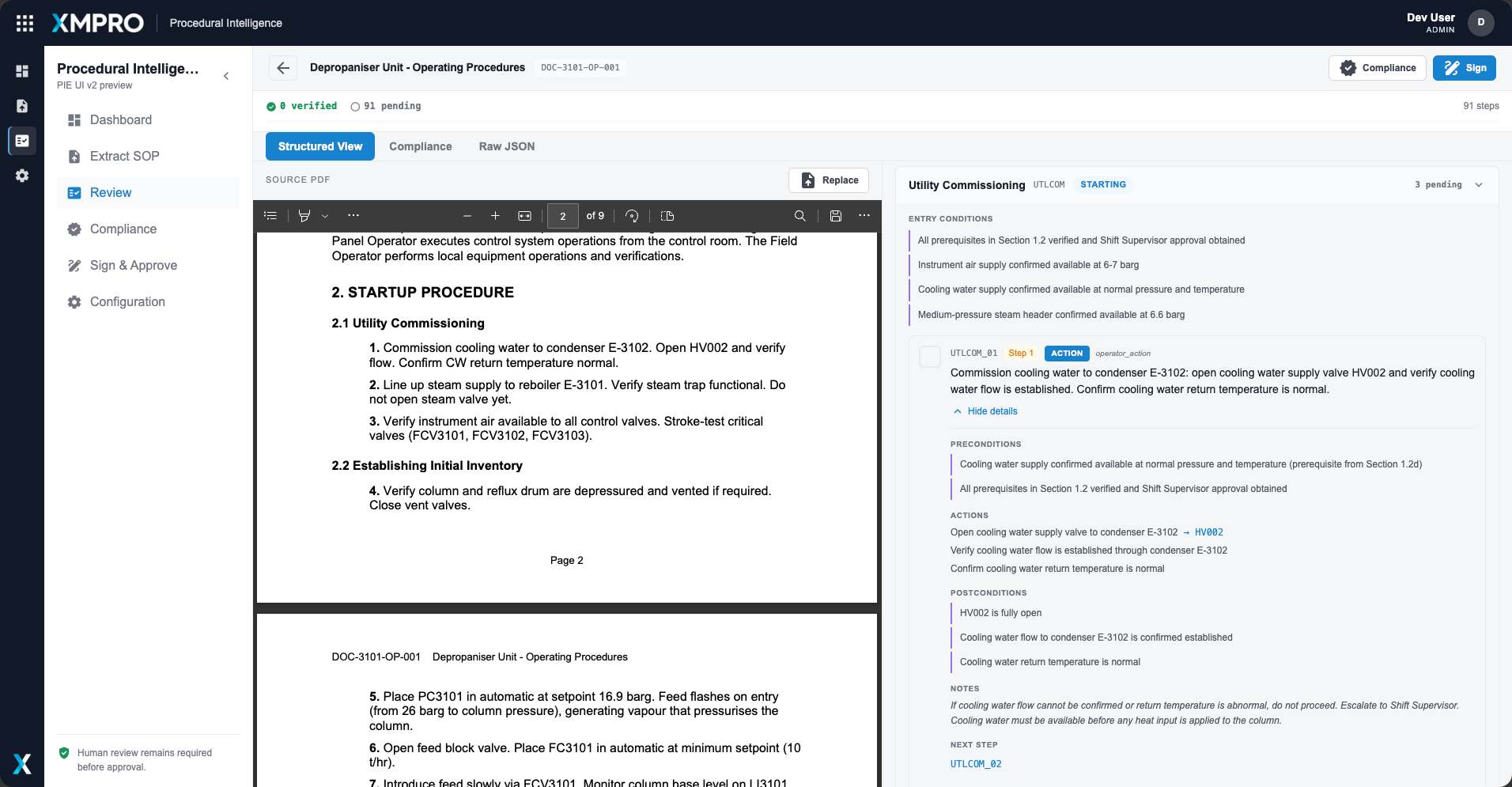
Compare the instruction with its source. Verify what is right, flag what needs attention, and keep pending work visible.

XMPro PIE source procedure beside an expanded instruction with entry conditions, preconditions, actions and postconditions. Review shows 0 verified and 91 pending steps.
Source-linked review · conditions · actions · postconditionsEnlarge screen

04 Structure

Keep the meaning— not just the words.

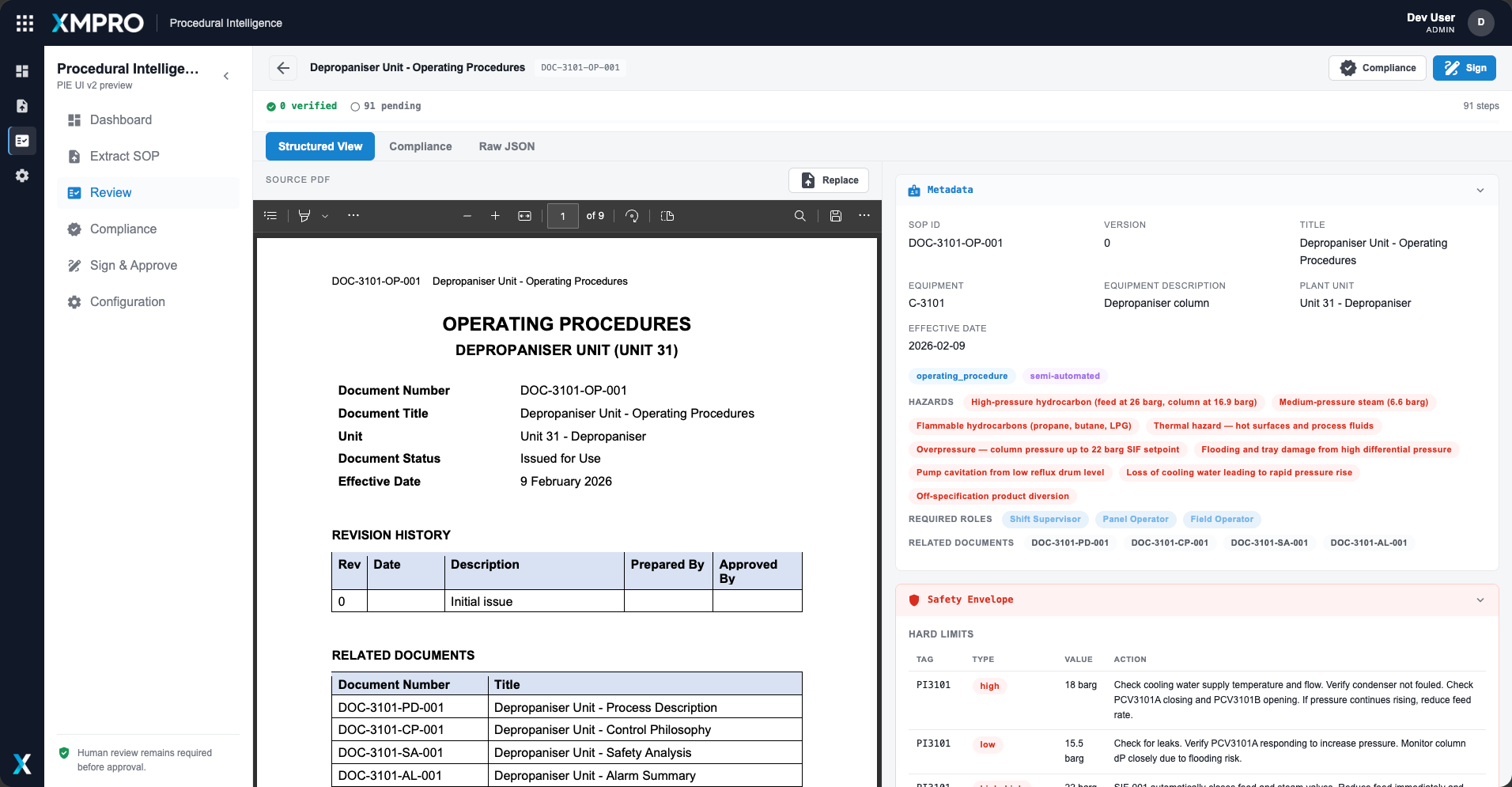
Conditions, limits, actions and exceptions become typed fields. Software receives a procedural model, not another summary to interpret.

XMPro PIE source procedure beside typed metadata, hazards, required roles, related documents and safety limits.
Metadata · roles · safety limits · source documentEnlarge screen

05 Sign

Sign the version. Preserve the accountability.

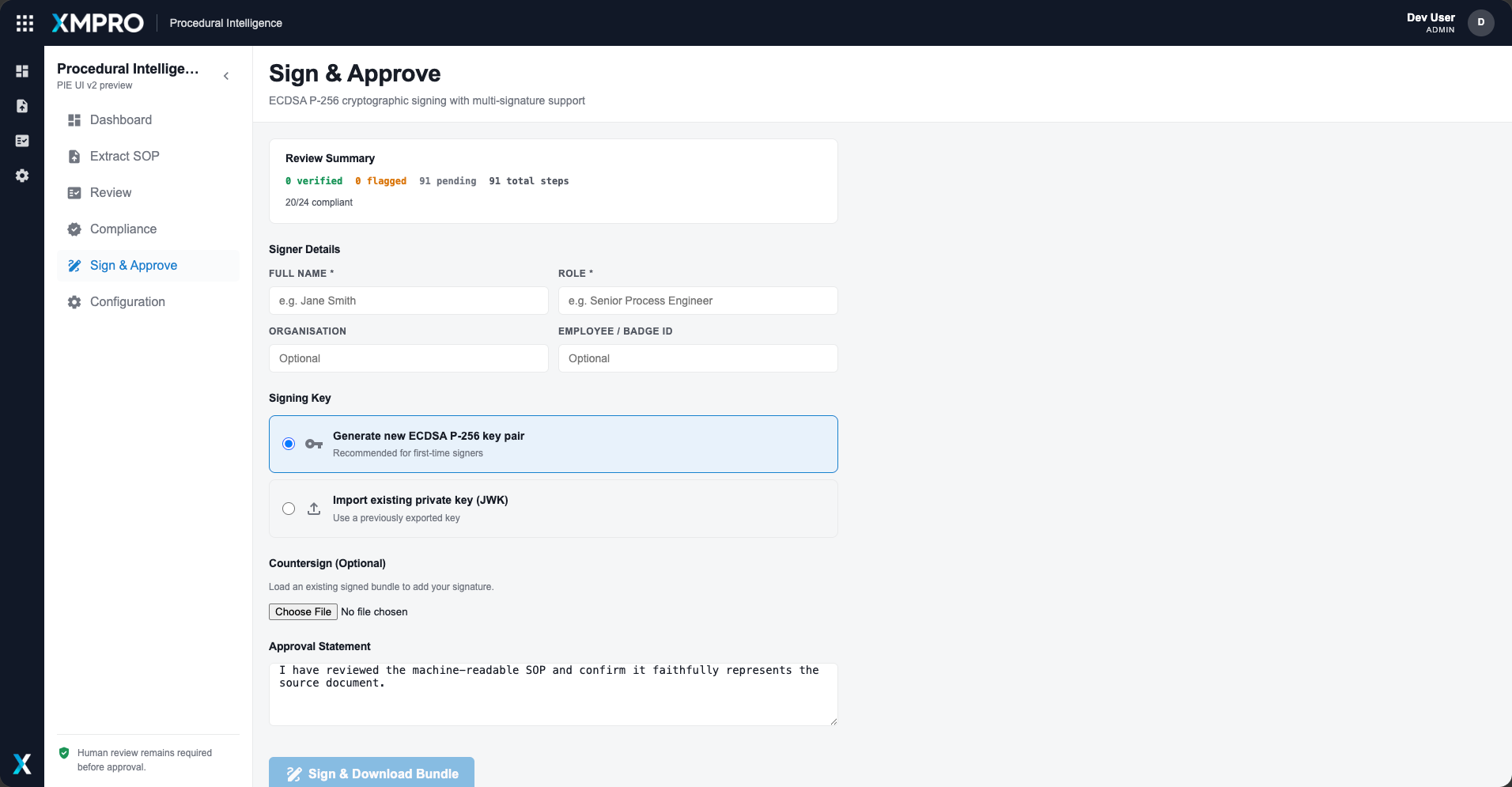
Record the reviewer, role and approval statement. A content hash and signature make changes to the signed procedure detectable.

XMPro PIE Sign and Approve screen with 91 pending steps, blank signer details, signing-key choices, optional countersigning and an approval statement.
Review summary · signer details · approval statementEnlarge screen

Turn your procedures into trusted knowledge for your agents.

Part of the Agentic Operations Platform

The “how” alongside the “what”.

Procedural knowledge and operational context solve different parts of the same problem.

Procedural Intelligence Engine

How should this operation be performed?

The instructions, conditions, limits and abnormal responses captured from controlled procedures.

You are here · XMPro PIE

Operational Context Engine

What does this mean in this operation?

The identities, relationships, constraints and source context that connect assets and operational information.

Explore the Context Engine

A few useful distinctions

Before you put a procedure to work.

How is this different from asking questions of a document?

Document search retrieves passages to help answer a question. XMPro PIE builds a structured procedural model: operating conditions, limits, typed steps and abnormal responses. That model can be inspected, reviewed and signed before an agent uses it.

Does every procedure use eight passes?

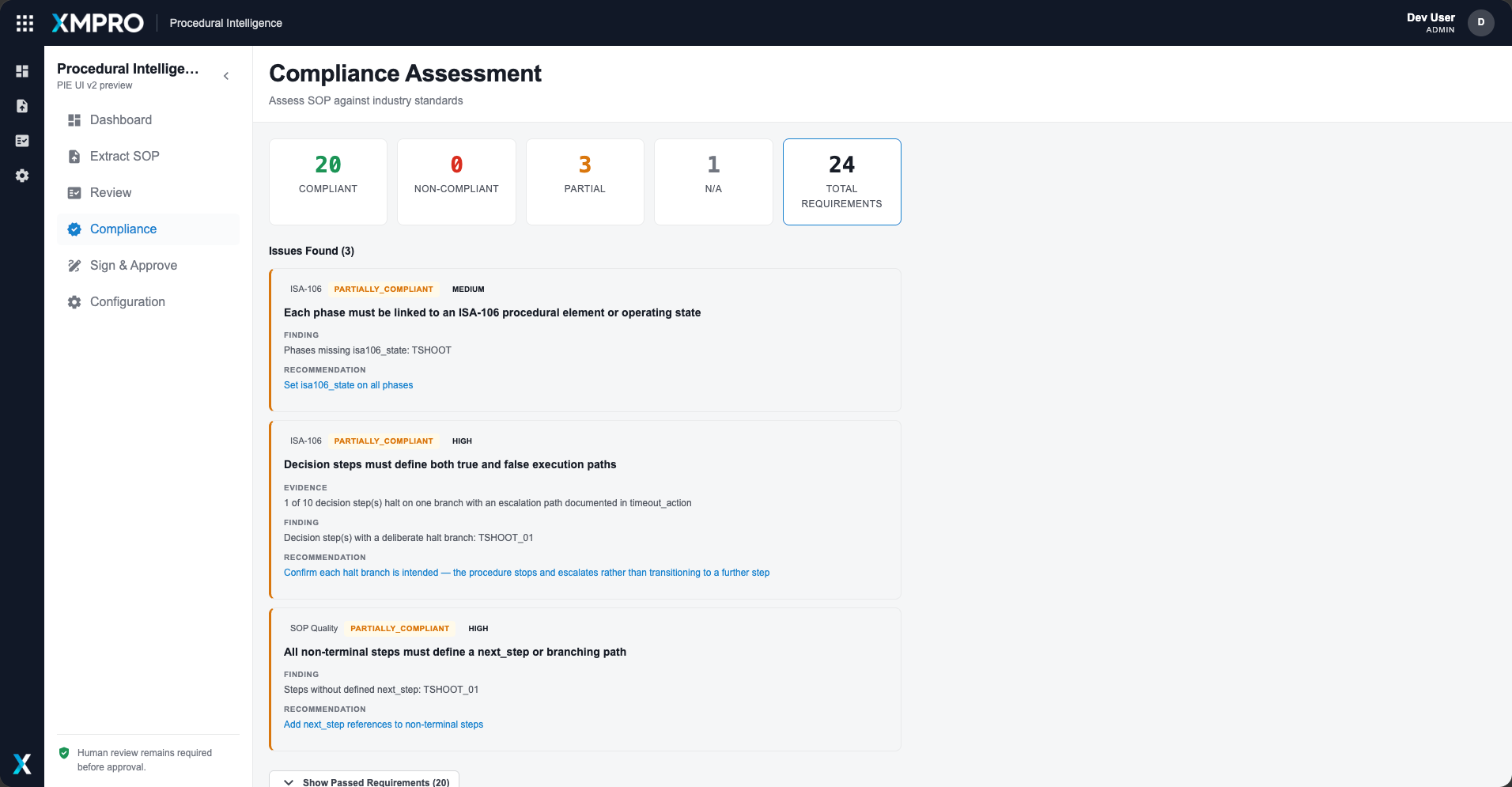
The operating-procedure workflow uses eight stages, including text extraction and cross-validation. XMPro PIE selects the applicable passes for the procedure type. Compliance assessment is a separate step.

Does a signature guarantee the procedure is correct?

No. A signature and content hash let a verifier detect changes to the signed procedure and check its signature. Engineering review establishes whether the content faithfully represents the source and is appropriate for its intended use. Both matter.

Does signing give an agent permission to act?

No. The signed procedure provides knowledge, not blanket operating authority. Agent permissions, live operating context, constraints and required human approvals still govern what can happen.

Start with a procedure you know

Your knowledge. A governed path to use it.

Walk through extraction, verification and sign-off with your team.