Identity
Resolve business concepts to technical identifiers across asset, process, and enterprise systems.
XMPro Operational Context Engine connects asset identity, semantics, relationships, source priority, constraints, and lineage so applications, AI Flow patterns, advisors, Cognitive Decision Teams, XMPro FRS simulations, and bounded actions can work from trusted operational context. The result is your Operational Knowledge Graph: a unified, governed, standards-portable model of your operations.
OIM sits inside OCE as the identity and ontology model.
OCE sits in the middle of the plant's information. It takes in everything that produces data, makes sense of it, and hands clean, trustworthy answers to the people, apps, and AI agents that need them.
What feeds it
Live signals
sensors, equipment readings
Business systems
ERP, maintenance, work orders
People and agents
specialists, MAGS agents
What OCE does
Three jobs, one place
Take it in, fast
Live readings land instantly, ready to show on a screen.
Understand and remember
Works out what things mean and how they connect, and keeps the history.
Answer from one place
Anyone can ask one question and get a straight answer, no chasing systems.
Who uses it
Dashboards
App Designer screens
AI agents
MAGS, MCP tools
Other apps
reports, mobile, partners
Trust and safety wraps all of it
People always outrank machines, every answer can be traced back to where it came from, and nothing unsafe or unverified is allowed through.
In one sentence: OCE is the plant's single, trustworthy source of answers, fast enough for live screens, smart enough to explain itself, and safe enough to act on.
Operational systems were not designed as one decision system. The signals already in your operation carry different names, meanings, priorities, and trust levels.
THE SHIFT
Agents, workflows, simulations, and human decisions all need a governed way to know what data means, where it came from, and whether it can be trusted.
OCE turns operational data into a governed context layer, your Operational Knowledge Graph, connecting identity, semantics, relationships, constraints, source priority, and lineage.
It gives applications, AI Flow patterns, workflows, Assistants, Advisors, Cognitive Decision Teams, simulation, and bounded action a shared context foundation.
Model assets, processes, constraints, and source priorities in a way that can be inspected, extended, and governed — so decision logic travels across applications, AI Flow patterns, advisors, decision teams, sites, and operating domains.
Resolve business concepts to technical identifiers across asset, process, and enterprise systems.
Capture what operational data means, not just what it is called.
Model how assets, processes, alarms, work orders, and enterprise context connect.
Express operational rules, policies, and validation commitments that data must satisfy.
Encode which source wins when systems disagree, and where human judgement overrides agents.
Track where context came from, how it was derived, and whether it can be trusted.
OCE provides the foundation for governed operational context, with ontology-driven capabilities for identity resolution, semantic validation, provenance, and agent-ready context.
The OCE ontology is built on the standards any semantic engineer already knows. Your team can inspect, extend, and validate it with mainstream skills, with no proprietary certification and no forward-deployed engineers. And your ontology is fully exportable as RDF, on demand, at any time.
Core semantic standards
Operational alignments
If a vendor cannot show you the export path, the ontology was never yours.
Data Stream Designer observes, normalises, enriches, and prepares operational signals. OCE decides how those signals connect to identity, semantics, relationships, constraints, source priority, and lineage. Together, they turn raw operational signals into context that can support governed decisions.
OCE supports governed ontology creation from operational data, with Data Stream Designer producing candidate mappings and OCE validating what becomes trusted semantic context.
OCE's knowledge substrate runs on commercial and open-source databases you procure on your own paper: graph, time-series, document, semantic, vector, and analytics stores, on your infrastructure, on-premises, private cloud, hybrid edge, or fully air-gapped, on the silicon you choose. The ontologies, the identity mappings, the operational knowledge your specialists encode, and the full provenance record are yours, in W3C open standards, exportable at any time. XMPro licenses the engine that makes them live.
You own
The databases, ontologies, mappings, and evidence record.
You license
The engine: query federation, source priority, fail-closed governance, and provenance.
You can always
Export everything as RDF, on demand, and walk away.
If your relationship with any vendor ends, including us, your operational knowledge keeps standing on your infrastructure. Your audit trail outlives your vendor.
OCE gives AI-assisted operations a governed context foundation before recommendations, coordination, XMPro FRS front-running simulation, approval, or action.
It helps ensure that agents do not invent operational state, guess asset identity, or reason from disconnected signals without source priority and lineage.
OCE sits between operational signals and the decision surfaces that use them. It is the governance step that turns observed data into trusted semantic context. This is industrial contextualization with governance: candidate mappings become trusted context only after validation, source-priority resolution, and provenance capture.
01
Assets, sensors, alarms, historian, work orders, engineering data, and enterprise systems.
02
Observes, normalises, enriches, and prepares operational signals. Produces candidate mappings.
03
Validates identity, semantics, relationships, constraints, source priority, and provenance. OIM sits inside OCE as the identity and ontology model.
04
AI Flow patterns, applications, Assistants, Advisors, Cognitive Decision Teams, simulation, and bounded action.
DECISION SURFACES THAT CONSUME TRUSTED CONTEXT
Walk through OCE with a solution architect, or read the broader platform reference architecture.
For platform vendors and OEMs: OCE is available as an embedded context and governance layer beneath your own solutions, so your customers own their graphs, in open standards. Talk to us about partnering
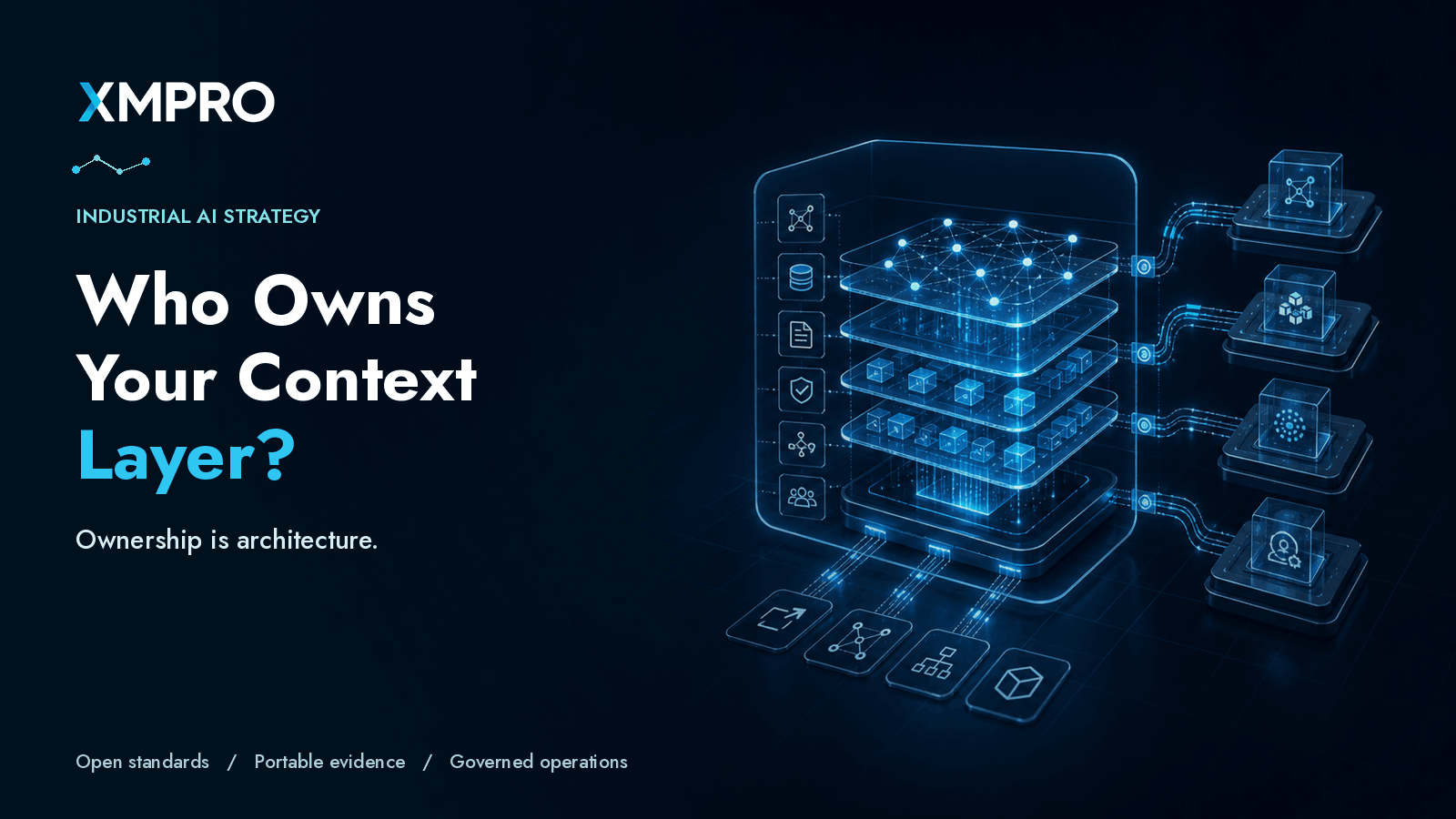
France's intelligence agency dropped a platform it could not itself turn off. Any operator building an industrial context layer faces the same…

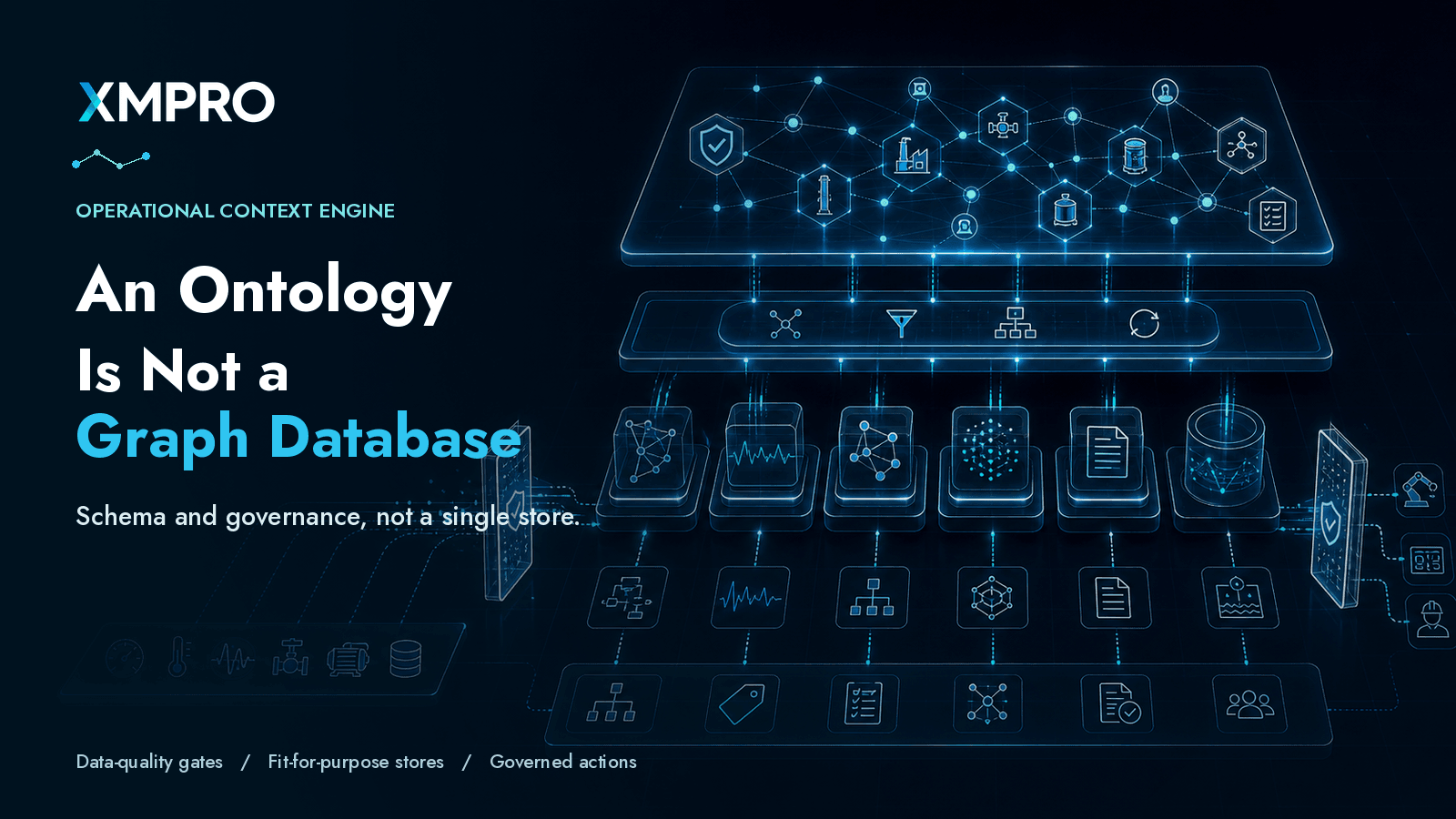
Why industrial context needs a system of fit-for-purpose data stores, standardized and governed, before an agent can act on it safely.