

Condition Monitoring · AGRICULTURE
Air quality, monitored as a farm-level operating signal.
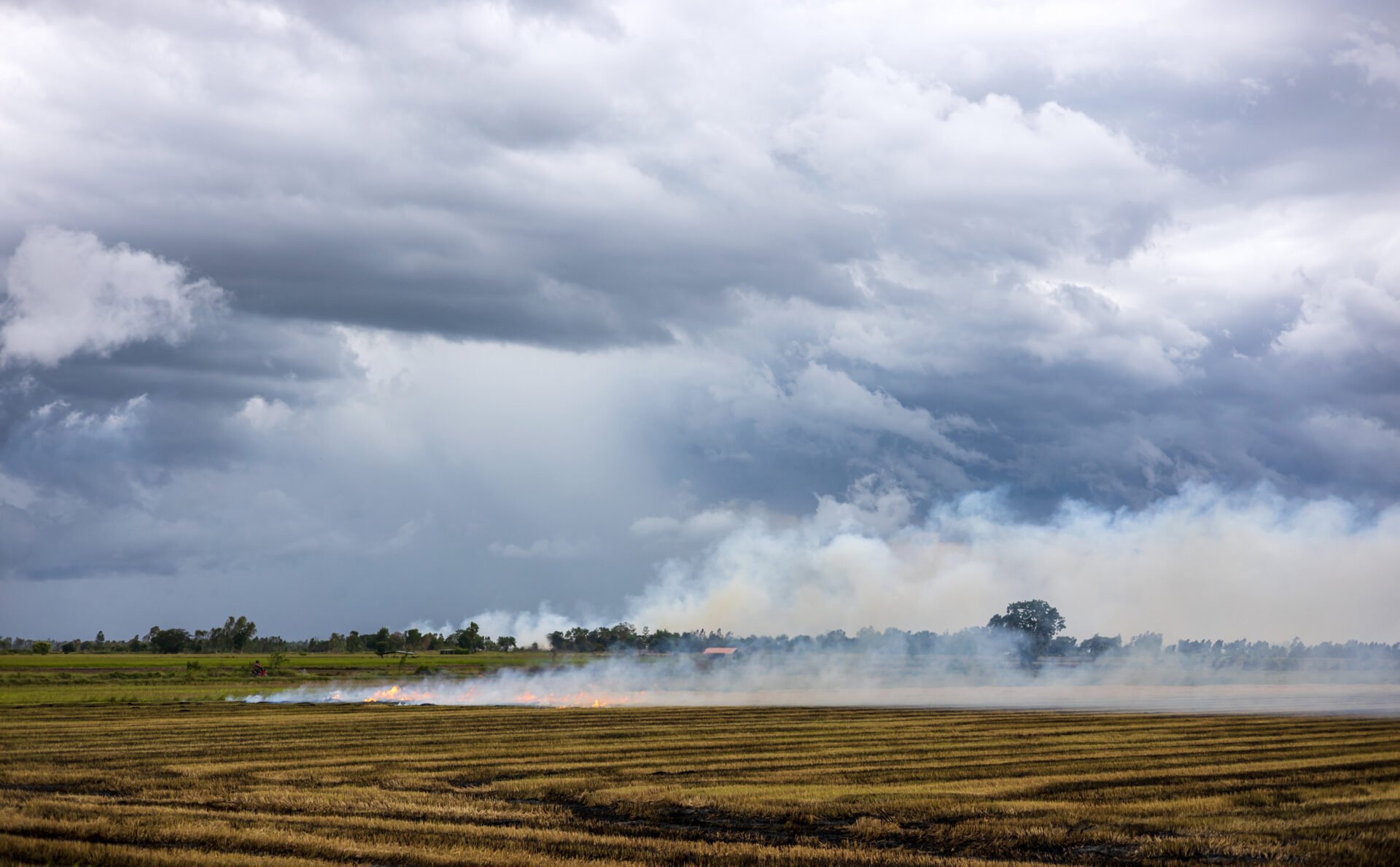
Air pollutants quietly cut yield, acidify soil and expose farm workers to risk — and trigger compliance reporting whether the farm has measured anything or not. The XMPro AO Platform brings IoT-sensor telemetry, predictive analytics and compliance reporting under one operational picture so air quality becomes a managed signal, not a downstream surprise.
What's getting in the way today.
Agricultural operations are increasingly exposed to air-quality pressure across four fronts:
Crop health and yield
Exposure to air pollutants suppresses photosynthesis and stresses crops — degrading both yield and quality long before the damage is obvious in the field.
Environmental compliance
Air-quality reporting obligations are tightening, and the cost of non-compliance — financial and reputational — is rising.
Soil degradation
Airborne pollutants drive soil acidification and nutrient imbalance, compounding crop pressure over multiple growing seasons.
Worker safety
Farm workers in zones with poor air quality face health risks that go unmanaged without continuous monitoring.
Air Quality Monitoring for Agriculture — how it works.
A continuous picture of air quality across the farm, fed by IoT sensors and tied to predictive analytics, customisable dashboards and automated compliance reporting.
IoT sensors deployed across the farm feed continuous air-quality telemetry — pollutants, particulate levels, weather and soil conditions — into the platform. Predictive analytics models aggregate the streams and forecast air-quality issues before they reach crop, soil or worker. Customisable dashboards surface real-time state and predicted trends to farm managers, with threshold-driven alerts routed to the right responder. Compliance reporting is generated automatically from the same telemetry, so the evidence trail for regulators is a by-product of the operational picture rather than a separate exercise.
*Illustrative dashboards from the platform. Layout, signals and decision points are scoped per site.
Scope this for your operation.
Tell us about your fleet, your control maturity and the lever that matters most. We’ll map this use case to your starting point.
What this looks like in operation.
Proactive crop protection
Pollutant trends are flagged before they suppress yield, so mitigation runs ahead of crop damage rather than after it.
Regulatory compliance
Automated reporting turns environmental compliance into a by-product of normal operations rather than a periodic project.
Healthier soil and workers
Continuous monitoring exposes soil-acidification and worker-exposure risks while they’re still recoverable.
Built for these industries.
Other solutions you might explore.
Not a concept. In production.
XMPro is deployed at Tier 1 global operators across asset-intensive and mission-critical industries — delivering measurable results across predictive maintenance, process optimisation and operational intelligence.
Now pushing the frontier.
MAGS agents are achieving what no other industrial platform has demonstrated — sustained autonomous operations at enterprise scale.