

TARGETED OUTCOME
30-50% Reduction in unplanned conveyor downtime Condition Monitoring · MINING
Mainline conveyors that flag failure before they stop the mine.
Mining mainline conveyors run continuously, carry abrasive material, and span kilometres. When one stops, production stops upstream and downstream of the failure point. The XMPro AO Platform monitors every conveyor section in real time, predicts the failure mode, and feeds the maintenance plan with prioritised work — turning long-conveyor downtime into a managed engineering signal.
What's getting in the way today.
Mainline conveyors are the throughput artery of the mine. Five pressures compound:
ISSUE 01 OPEN
Wear and tear
Continuous operation against abrasive material drives rapid degradation across belts, idlers, motors and structure.
ISSUE 02 OPEN
Downtime and failures
Unexpected breakdowns ripple through the whole mine — production stops upstream and downstream of the failure point.
ISSUE 03 OPEN
Efficiency optimisation
Maintaining throughput while managing energy consumption and load distribution along kilometre-scale conveyors is hard without continuous telemetry.
ISSUE 04 OPEN
Safety risks
Mainline conveyor failures pose hazards to personnel and equipment; failure modes need to be flagged before they escalate.
ISSUE 05 OPEN
Data overload
Vast operational data streams across long conveyors are useless without ranking, context and routing to the right person.
Mainline Conveyor Condition Monitoring — how it works.
A unified view of every section of every conveyor — fed by the sensors already in service, with predicted failure modes ranked by service criticality so the planner gets the same signal as the reliability engineer.
Real-time data integration Predictive analytics Anomaly detection Automated recommendations Operational dashboards Digital twin simulation
How it works
The platform integrates speed, load, vibration and motor current data continuously across every conveyor section. ML models analyse this telemetry to predict component failures and surface specific failure modes — bearing wear, idler degradation, belt damage, motor amperage anomalies — with confidence scoring and time-to-action windows. A digital twin lets reliability engineers simulate scenarios and tune intervention timing. Threshold breaches generate ranked maintenance recommendations with parts list and crew assignment, feeding directly into work-order creation.
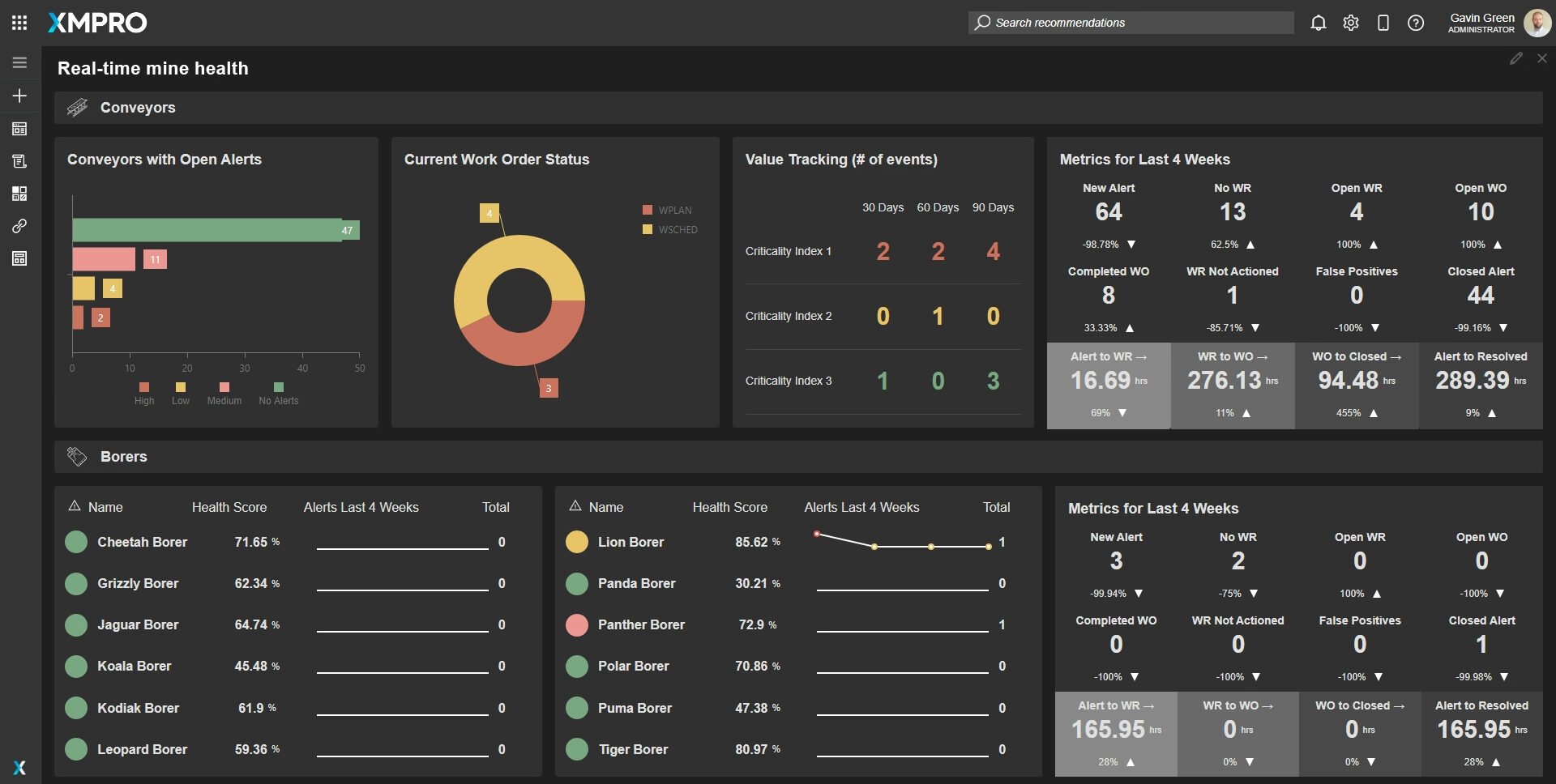
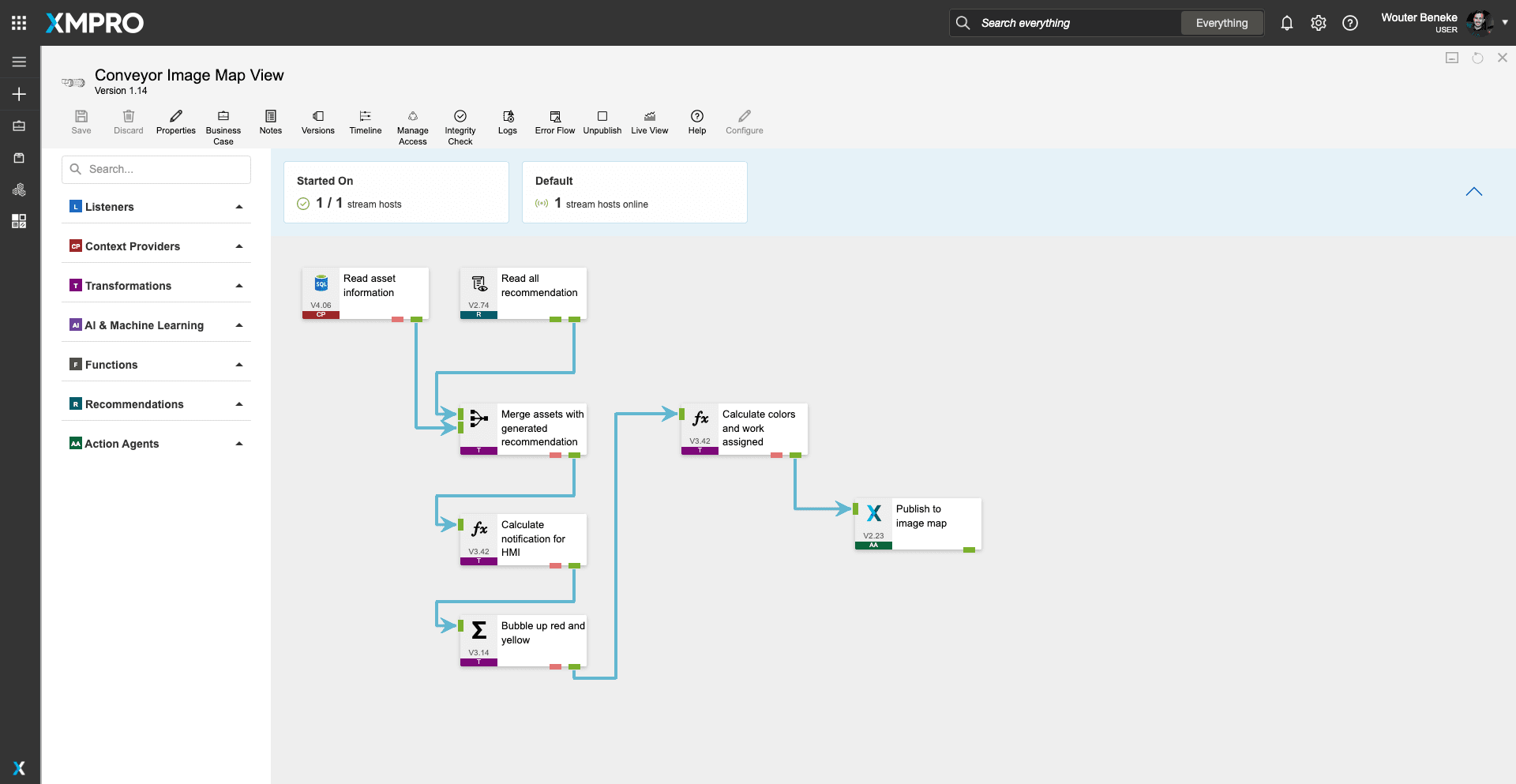
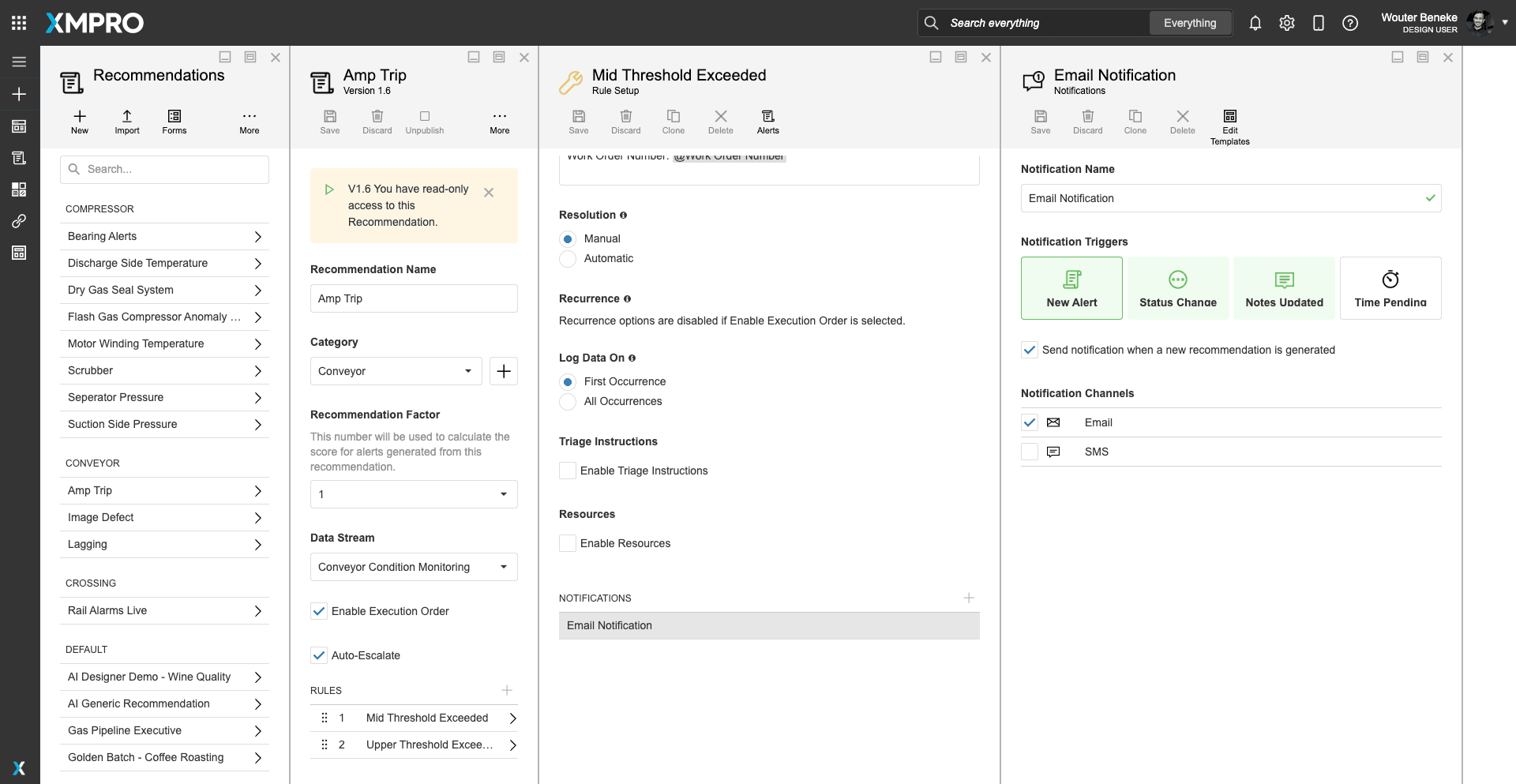
*Illustrative dashboards from the platform. Layout, signals and decision points are scoped per site.
Scope this for your operation.
Tell us about your fleet, your control maturity and the lever that matters most. We’ll map this use case to your starting point.
*Indicative ranges from industry research and customer engagements · actuals vary by site, control maturity and starting baseline.
What this looks like in operation.
Predictable throughput
Failure modes surface days ahead of stoppage so production plans around interventions instead of reacting to them.
Right-sized maintenance
Work moves from OEM calendar to actual condition, freeing crew time for higher-value reliability work.
Better safety posture
Anomaly patterns flagged early prevent the cascading hazards that come with mainline conveyor failure.
Built for these industries.
Other solutions you might explore.
Not a concept. In production.
XMPro is deployed at Tier 1 global operators across asset-intensive and mission-critical industries — delivering measurable results across predictive maintenance, process optimisation and operational intelligence.
Now pushing the frontier.
MAGS agents are achieving what no other industrial platform has demonstrated — sustained autonomous operations at enterprise scale.
15+
Days Autonomous
Safety-critical petrochemical operations
3-5+
Agents Per Team
Specialized agents coordinating per use case
50+
Teams Deployable
Scale across sites and business units
100%
Governed
Every agent, every decision, every action, auditable