
Predictive Maintenance · OIL & GAS
Oil-well maintenance planned against condition, not the OEM calendar.
Well maintenance carries production, safety and compliance risk at the same time — and most plans run on age-of-asset rather than current condition. The XMPro AO Platform fuses sensor data, operational performance and maintenance history into a continuous picture of each well, so interventions are scheduled when the well needs them.
What's getting in the way today.
Oil-well maintenance breaks down across five pressures:
Predicting maintenance needs
Without continuous condition telemetry, well failures surface as unplanned downtime and costly repairs instead of scheduled work.
Maintenance scheduling
Coordinating well interventions with production minimises disruption — but only if the planner can see condition, resource availability and production windows together.
Resource allocation
Crews, rigs and parts are finite; allocating them across the well portfolio without condition data wastes both crew time and well availability.
Data integration
Sensor data, historical maintenance, operational performance and compliance metrics sit in separate systems, so plans run on partial views.
Compliance and safety
Maintenance activity has to meet environmental and safety regulation — evidence has to be auditable, not reconstructed afterwards.
Oil Well Maintenance Planning — how it works.
A unified picture of every well — fed by condition telemetry and maintenance history, modelled as a digital twin, and tied to predictive analytics that drive maintenance scheduling, resource planning and compliance reporting.
The platform models each well and its associated equipment as a digital twin, ingesting condition sensor data, operational performance metrics and historical maintenance records. Predictive analytics anticipate maintenance needs by well, surfacing failure modes with confidence scoring and time-to-action. Schedule optimisation aligns interventions with crew, rig and parts availability and with production windows. Automated alerts route to maintenance teams when condition deteriorates. Customisable dashboards expose maintenance requirements, scheduling and resource allocation to planners, operational managers and compliance officers. Compliance and safety metrics are tracked continuously, generating audit-ready evidence as a by-product.
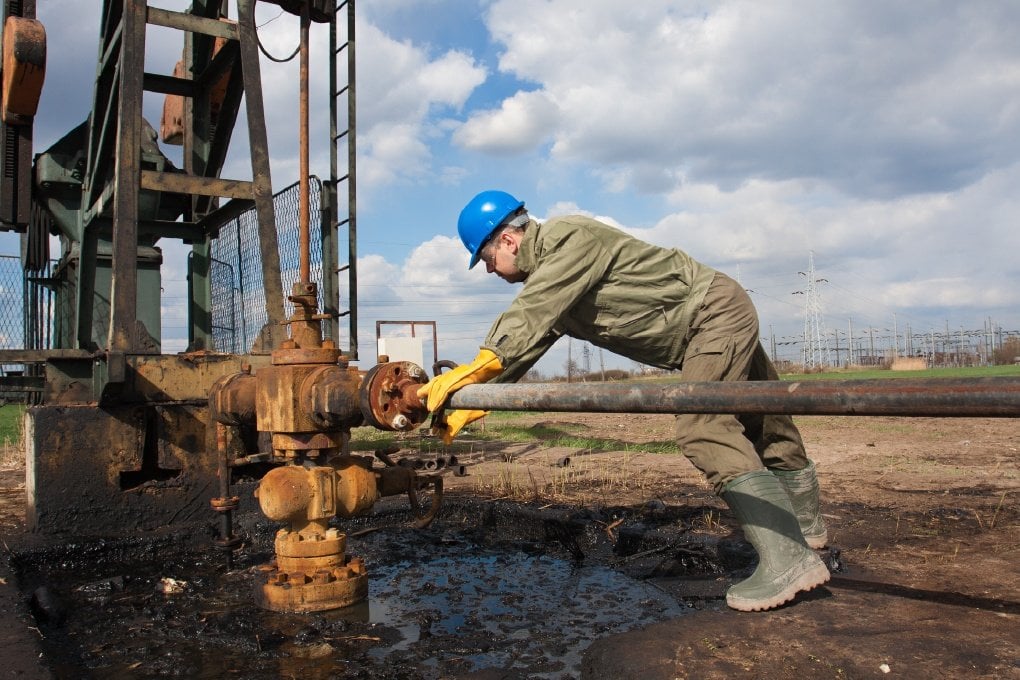
*Illustrative dashboards from the platform. Layout, signals and decision points are scoped per site.
Scope this for your operation.
Tell us about your fleet, your control maturity and the lever that matters most. We’ll map this use case to your starting point.
What this looks like in operation.
Predicted condition replaces calendar maintenance
Wells are serviced on actual condition rather than fixed schedules — reducing both over-servicing and missed degradation.
Synchronised resource planning
Crews, rigs and parts align with the wells that need them, so portfolio-level availability stops leaking through allocation gaps.
Auditable compliance evidence
Compliance reporting is generated from operational telemetry, not reconstructed after the fact — defensible for regulator inspection.
Built for these industries.
Other solutions you might explore.
Not a concept. In production.
XMPro is deployed at Tier 1 global operators across asset-intensive and mission-critical industries — delivering measurable results across predictive maintenance, process optimisation and operational intelligence.
Now pushing the frontier.
MAGS agents are achieving what no other industrial platform has demonstrated — sustained autonomous operations at enterprise scale.