

Condition Monitoring · POWER UTILITIES
ID fans that flag failure before they take the unit offline.
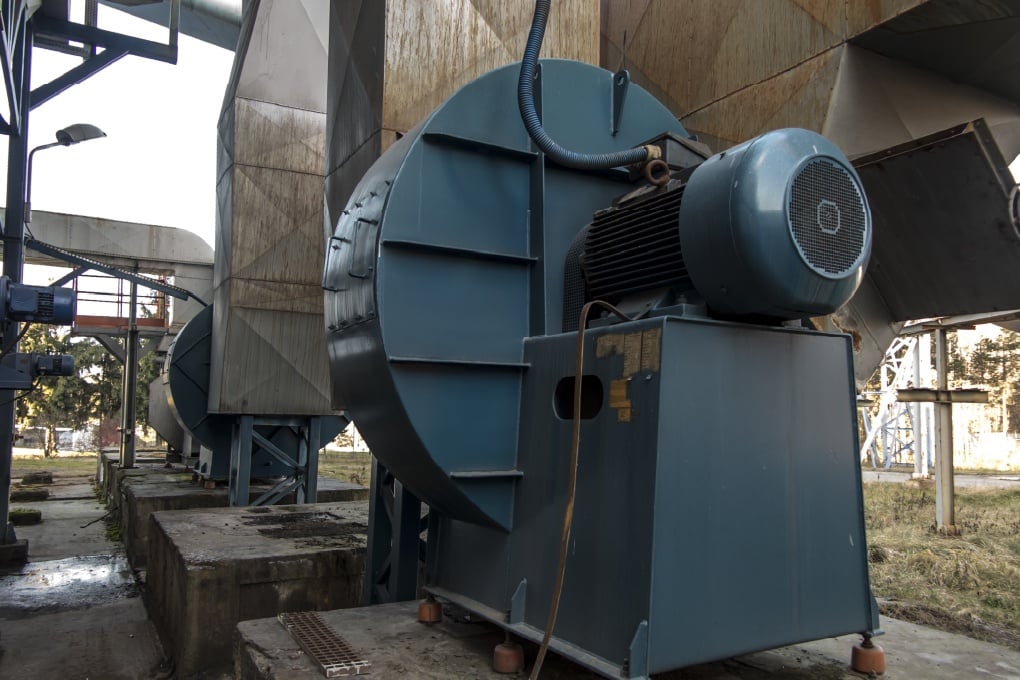
Induced draft fans run continuously, draw significant power, and pull entire process units down when they fail. The XMPro AO Platform monitors vibration, temperature, energy use and airflow live — predicting wear, surfacing efficiency loss, and keeping the fan inside its environmental envelope.
What's getting in the way today.
ID fan monitoring compounds five pressures:
Equipment wear and tear
Continuous operation degrades bearings, blades and motor components; failures arrive as unplanned stops, not as scheduled events.
Energy efficiency
ID fans consume significant plant energy. Drift in fan speed, airflow or motor efficiency hides inside the aggregate utility bill.
Predictive maintenance
Continuous operation and criticality make running-asset condition assessment hard — yet calendar-based maintenance either over-services or misses degradation.
Operational downtime
Unplanned ID fan failure stops the whole process unit, with cascade costs across upstream and downstream operations.
Environmental compliance
Fans must operate inside emission and process limits; drift outside the envelope triggers reporting and risk exposure.
Induced Draft Fan Monitoring — how it works.
Continuous monitoring of vibration, noise, temperature, pressure, airflow, fan speed and energy use — with predictive maintenance models tuned for ID fan failure modes.
The platform ingests sensor data continuously — vibration and noise (mechanical imbalance), temperature and pressure (operational state), energy consumption (efficiency drift), fan speed and airflow (ventilation effectiveness), and bearing and blade condition (wear patterns). A digital twin of the ID fan lets reliability engineers simulate parameter changes and assess their impact on health and efficiency before applying them. ML models predict maintenance needs at the component level, automated alerts surface anomalies with ranked recommendations, and continuous monitoring of operational parameters keeps the fan inside its environmental-compliance envelope.
*Illustrative dashboards from the platform. Layout, signals and decision points are scoped per site.
Scope this for your operation.
Tell us about your fleet, your control maturity and the lever that matters most. We’ll map this use case to your starting point.
What this looks like in operation.
Predictable uptime
Component degradation surfaces days ahead of stoppage, moving work into planned outages rather than emergency response.
Lower energy cost
Per-asset efficiency baselines turn fan energy use into a leverable line item, with operator and maintenance levers tied to the same numbers.
Environmental compliance
Continuous monitoring keeps operational parameters inside emission limits, producing the regulator evidence trail as a by-product of normal operations.
Built for these industries.
Other solutions you might explore.
Not a concept. In production.
XMPro is deployed at Tier 1 global operators across asset-intensive and mission-critical industries — delivering measurable results across predictive maintenance, process optimisation and operational intelligence.
Now pushing the frontier.
MAGS agents are achieving what no other industrial platform has demonstrated — sustained autonomous operations at enterprise scale.